
Table of Contents
- Step 1: Understand How Sun Exposure Damages Your Outdoor Furniture
- Step 2: Choose the Best Patio Furniture Materials for Sun
- Step 3: Add Shade With Umbrellas, Awnings, and Pergolas
- Step 4: Use Outdoor Furniture Covers for Sun Protection
- Step 5: Protect Outdoor Cushions From Fading
- Step 6: Apply Protective Coatings, Sealants, and Wax
- Step 7: Clean, Inspect, and Store Furniture to Protect It From the Sun
- How to Restore Sun-Damaged Wood Furniture
- Frequently Asked Questions
Last Updated: October 21, 2026
Step 1: Understand How Sun Exposure Damages Your Outdoor Furniture
Learning how to protect outdoor furniture from sun starts with knowing what you’re up against. Sun damage is the slow breakdown of a material’s surface and structure caused by ultraviolet exposure, heat, and dryness. Most people blame the heat. The UV rays do the real damage.
Ultraviolet exposure breaks the chemical bonds in fabric, plastic, and finishes. Colors fade. Surfaces chalk and crack. Metal gets hot enough to warp thin frames.
At Molino Patio, we’ve spent over 30 years watching what intense sun does to patio furniture. Our take: sun damage is not a cosmetic problem. It shortens the life of every piece you own.
Here’s what happens to common materials:
- Fabric loses color and strength as UV rays break down the fibers
- Wood dries out, grays, and splits when moisture leaves faster than it returns
- Metal heats up, and paint or powder coating can blister and peel
- Plastic and resin turn chalky and brittle over time
The good news? Each damage type has a fix. The next six steps cover them in order.
Step 2: Choose the Best Patio Furniture Materials for Sun
The best patio furniture materials for sun are powder-coated aluminum, wrought iron, teak, and solution-dyed acrylic fabrics. These hold up to ultraviolet exposure far better than untreated wood, standard resin, or cheap polyester. Material choice is the single biggest factor in how long your furniture lasts.
But “best” depends on how each material fails under UV and heat, and what maintenance that failure demands. Here is how the common outdoor furniture materials compare on sun resistance and care:
- Powder-coated aluminum: The powder coating is the UV barrier. It resists fading and chalking far better than paint, but scratches expose bare metal. Touch up chips promptly and expect the coating to last years before needing a recoat. Lightweight and rust-free, it is a strong choice for high-sun, humid climates.
- Wrought iron and steel: Heavy and stable in wind, but the finish is the weak point. Powder coating or paint can blister and peel under intense heat. Inspect for chips monthly and touch up with matching outdoor paint. Bare spots rust quickly in coastal air.
- Teak and tight-grain hardwoods: Teak contains natural oils that slow moisture loss. Left untreated it weathers to a silver-gray patina, which is cosmetic, not structural. If you want the honey color, seal annually. Other hardwoods (ipe, mahogany) behave similarly but need more consistent sealing.
- Wicker and synthetic resin: High-density polyethylene (HDPE) wicker resists UV better than PVC or cheap resin, which turns chalky and brittle. Look for wicker labeled UV-stabilized. Clean with mild soap and avoid pressure washing, which can force water into weave gaps.
- Outdoor fabrics: Solution-dyed acrylic (the standard behind brands like Sunbrella) holds color deep in the fiber, so fading is slow and gradual. Surface-dyed polyester fades faster and weakens sooner. For cushions, prioritize solution-dyed acrylic or a documented UV-resistant finish.
What most guides miss: the finish matters as much as the frame. A quality powder coating blocks UV rays from reaching the metal underneath, and a scratched coating is where sun damage starts.
When you shop, flip the cushion over and read the fabric tag. Solution-dyed acrylic holds color deep in the fiber, so fading shows up far slower than with surface-dyed polyester. If the tag doesn’t say solution-dyed or colorfast, assume it will fade.
A practical rule: match the material to your maintenance appetite. Aluminum and HDPE wicker need the least upkeep; teak and wrought iron reward regular sealing and touch-ups with decades of service. If you live where afternoon UV is intense and humidity is high, favor powder-coated aluminum frames and solution-dyed acrylic cushions, and plan to inspect finishes monthly.
Step 3: Add Shade With Umbrellas, Awnings, and Pergolas
Shade is the cheapest sun protection you can add. A patio umbrella, retractable awning, or pergola blocks direct sunlight before it ever touches your furniture. That single layer of shade can add years to fabric and finish life.
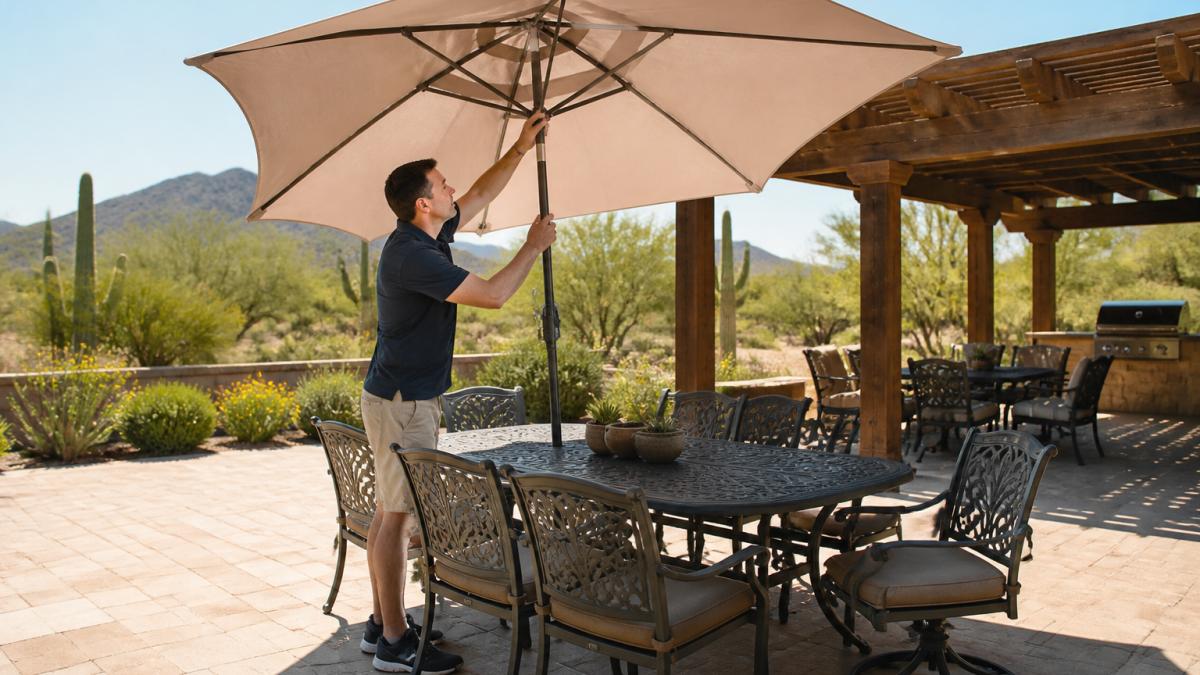
Match the shade structure to your space and sun angle:
- Patio umbrella: Best for dining sets and small seating areas. Move it as the sun shifts.
- Retractable awning: Good for patios attached to the house. Retracts when not needed.
- Pergola: A permanent shade structure. Slatted tops block the harshest midday sun while letting air flow.
Position shade where the afternoon sun hits hardest. In high-sun climates, that’s usually the west side of the patio.
Step 4: Use Outdoor Furniture Covers for Sun Protection
Outdoor furniture covers for sun protection work by blocking ultraviolet exposure and keeping heat and dust off the surface. A good cover is the most direct way to protect outdoor furniture when it’s not in use. But fit and fabric decide whether a cover helps or hurts.
Choose covers that are:
- Breathable, so moisture escapes and mold doesn’t form underneath
- UV-resistant, with a light color that reflects heat instead of trapping it
- Custom-fitted, so wind doesn’t whip them against the finish
A loose cover rubs paint and coating off in the wind. A tight, breathable cover protects the finish and keeps cushions dry.
How to choose and fit a cover that actually protects:
- Fabric and breathability: Look for woven fabrics labeled breathable or vented, often polyester or a polyester blend with a UV-resistant coating. Breathable fabric lets trapped moisture escape; non-breathable plastic traps it. Avoid vinyl or plastic tarps for long-term use.
- UV rating: Many covers carry a UV-resistance claim or a UPF rating. A higher UPF blocks more UV, but no cover is fully UV-proof. Light colors reflect heat better than dark colors, which absorb it.
- Water resistance vs. waterproof: Water-resistant fabric sheds rain while still breathing. Fully waterproof covers can seal moisture in, so pair them with vents or use them only for short-term rain protection.
- Sizing and fit: Measure the furniture’s widest points, including arms and back, and choose a cover sized to drape slightly loose but not billow. A cover that touches the ground can wick moisture up.
- Tie-downs and ventilation: Look for drawstrings, straps, or buckles to secure the cover in wind, plus mesh vents that let air circulate. Vents reduce condensation and wind lift.
- Seams and warranty: Reinforced seams and a manufacturer’s UV or fade warranty signal a cover built for sun exposure. Check the warranty terms before buying.
Never throw a plastic tarp over furniture as a shortcut. It traps moisture and heat, which can cause mold on cushions and bubbling on metal finishes. Use a cover made for outdoor furniture instead.
Fit matters as much as fabric. A cover that is too loose flaps in wind and scuffs finishes; one that is too tight traps heat and moisture. The best cover sits close without pressing on sharp edges, with vents open and tie-downs snug. Inspect covers seasonally for tears or UV degradation, since a worn cover stops blocking sun where it has thinned.
Step 5: Protect Outdoor Cushions From Fading
To protect outdoor cushions from fading, store them out of direct sunlight when not in use and rotate them regularly so no single side takes all the UV exposure. Cushions fade fastest because fabric sits closest to the sun all day.
A simple routine keeps cushions looking new:
- Bring cushions inside or into a storage box during long stretches of strong sun.
- Rotate and flip cushions weekly so wear and fading stay even.
- Spot-clean with mild soapy water before dirt works into the fabric.
- Let cushions dry fully before storing to prevent moisture and mildew.
Washable covers help here too. If your cushion covers zip off, wash them on a gentle cycle and air-dry in the shade, not direct sun.
Step 6: Apply Protective Coatings, Sealants, and Wax
A protective coating adds a sacrificial layer that takes the UV hit instead of your furniture. Wax, sealant, and UV-blocking sprays each suit different materials. Apply them correctly and they slow fading, drying, and cracking.
Match the product to the material:
- Wood furniture: Apply an outdoor sealant or marine-grade wax to lock in moisture and block UV rays.
- Metal furniture: Touch up scratches in the powder coating, then apply a UV-resistant clear coat.
- Wicker and resin: Use a UV-protective spray made for synthetic materials.
Safe application matters. Work in shade, on a clean dry surface, and follow the label. Thin coats beat thick ones.
The best time to apply a protectant is before the damage starts. A coat applied to new or freshly cleaned furniture lasts longer and protects better than one applied to an already-faded surface.
Step 7: Clean, Inspect, and Store Furniture to Protect It From the Sun
Routine care is how you protect outdoor furniture from sun over the long haul. Dirt holds heat, and heat speeds up fading and cracking. A quick clean and inspection every few weeks catches small problems before they spread.
Build a simple seasonal maintenance schedule:
| Task | How Often | Why It Matters |
|---|---|---|
| Wipe down frames and surfaces | Weekly | Removes dust and heat-trapping grime |
| Wash with mild soapy water | Monthly | Prevents buildup that dulls finishes |
| Inspect for cracks, rust, fading | Monthly | Catches damage early |
| Rotate and store cushions | Weekly in peak sun | Evens out UV exposure |
| Reapply sealant or wax | Seasonally | Restores the UV-blocking layer |
| Full seasonal storage | Off-season | Protects furniture when unused |
For seasonal storage, clean and dry each piece first. Store cushions indoors in vertical storage so air circulates. Cover frames or move them under shade.
How to Restore Sun-Damaged Wood Furniture
You can restore sun-damaged wood furniture by sanding away the gray, weathered layer, then sealing the wood to bring back color and block further UV damage. Wood that has turned silver or gray isn’t ruined. The damage is usually on the surface.
Follow these steps:
- Clean the wood with mild soapy water and let it dry fully.
- Sand lightly along the grain to remove the gray, faded layer.
- Wipe off all dust with a dry cloth.
- Apply an outdoor wood sealant or wax in thin, even coats.
- Reapply seasonally to keep the UV protection strong.
Deep cracks or soft, rotting spots mean the damage goes past the surface. In that case, replace the piece rather than refinish it.
Molino Patio builds wrought iron sets, pergolas, and custom pieces to handle intense sun, backed by a lifetime frame warranty and a 5-year cushion warranty. We also offer interest-free 90-day financing and price matching. Reach out and we’ll help you pick furniture built to last in the sun, or get a quote on a custom set for your space.
Frequently Asked Questions
How do you protect outdoor furniture from sun damage?
Start by placing furniture under shade from a pergola, awning, or umbrella. Use fitted outdoor furniture covers when pieces are not in use, especially during peak UV hours. Choose UV-resistant fabrics and finishes, and apply a protective coating or sealant to wood and metal twice a year. Rotate cushions and bring them inside during extreme heat. Regular cleaning with mild soapy water removes dust that can worsen sun damage and helps you spot fading or cracking early.
Do outdoor furniture covers protect against UV rays?
Yes, but performance varies. Look for covers made from solution-dyed acrylic or polyester with a UV-resistant coating and a UPF rating. A tight fit and breathable fabric prevent moisture buildup while blocking direct sunlight. Covers work best when used consistently, not just during storms. For full sun exposure, pair covers with shade structures and store cushions separately to extend their life.
How often should you apply a UV protectant to outdoor furniture?
Apply a UV protectant, sealant, or wax every three to six months, depending on sun intensity and material. In high-sun areas, reapply at the start of summer and again in early fall. Clean the surface first, let it dry completely, then apply a thin, even coat. Test on a small hidden area before treating the entire piece. Regular application prevents fading, drying, and cracking.
What material is best for covering outdoor cushions?
Solution-dyed acrylic is the top choice for cushion covers because the color is locked into the fibers, resisting fading from UV rays. Polyester with a UV-inhibitor treatment is a more affordable option. Avoid vinyl, which traps heat and moisture. Look for covers with zippers for easy removal and washing. Store cushions in a dry, shaded spot when not in use to further protect them from sun damage.
