
Table of Contents
- Modern Wrought Iron Patio Design for 2026
- Wrought Iron Patio Furniture Ideas for a Stylish Outdoor Space
- Wrought Iron vs Aluminum Patio Furniture: Which Lasts Longer?
- Best Patio Furniture Materials for Sun and Heat
- How to Maintain Wrought Iron Patio Furniture
- Small Patio Layouts and Space-Efficient Seating Arrangements
- Pergolas, Patio Covers, and Custom Wrought Iron Design
- Frequently Asked Questions
Last Updated: October 14, 2026
Modern Wrought Iron Patio Design for 2026
Modern wrought iron patio design in 2026 is about combining old-world durability with clean, contemporary lines that hold up under intense sun and heat.
Wrought iron remains a top choice for patios that need to survive real weather.
The 2026 approach favors mixing materials. Pair iron frames with teak, rattan, or weather-resistant fabric cushions, and let the metal provide the structure while softer elements add comfort.
The strongest 2026 patios combine wrought iron frames with at least one contrasting natural material, such as wood or woven resin, to soften the metal’s visual weight.
Wrought Iron Patio Furniture Ideas for a Stylish Outdoor Space
Start with a clear focal point. Wrought iron patio furniture ideas work best when you treat the patio like a room with defined areas rather than one open floor.
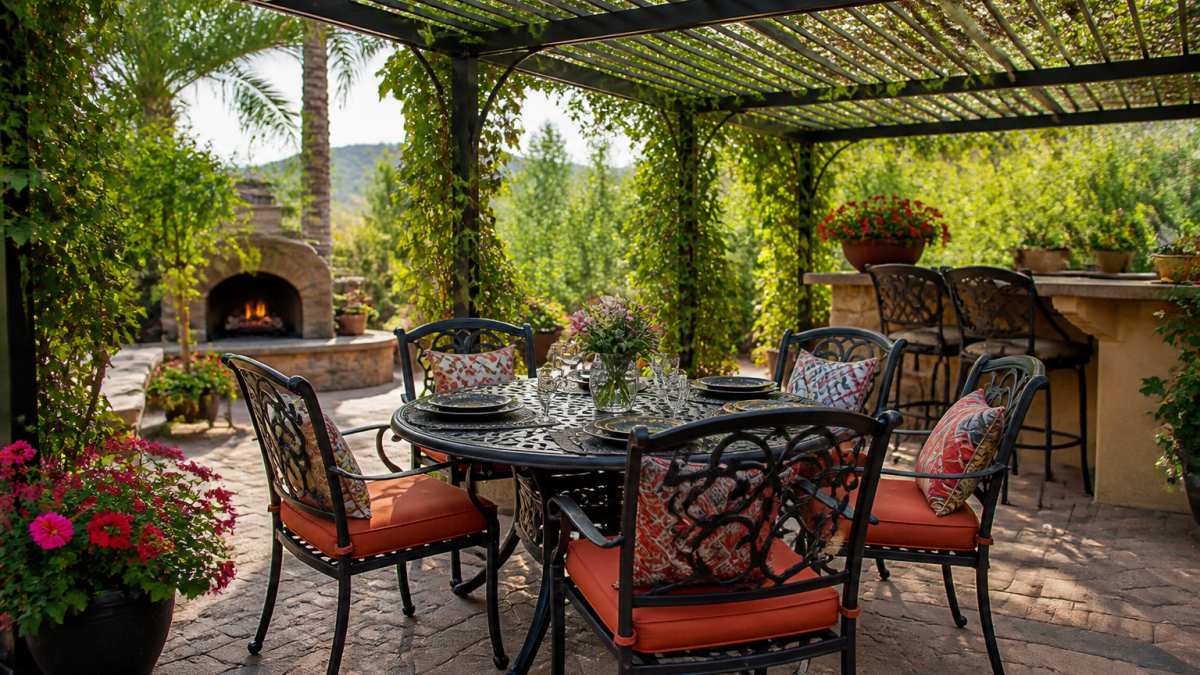
Black metal frames remain the most versatile base. They disappear against greenery and let colorful cushions and decorative iron accents carry the personality. If you want warmth, choose a bronze or antique-gold finish instead.
2026 Design Trends Shaping Wrought Iron Patios
The keyword asks about 2026, and most inspiration pages skip the forecast entirely. Here is what is actually moving this year:
- Sculptural, tapered silhouettes. Ornamental scrollwork is giving way to slim, tapered legs and open backs that read as modern rather than antique. The metal provides structure; negative space provides the style.
- Mixed-metal layering. Iron frames paired with brushed brass or matte black hardware in the same piece. The contrast keeps a large set from looking monolithic.
- Earthy, low-sheen finishes. Satin bronze, warm graphite, and muted olive powder coats are replacing high-gloss black. Low-sheen finishes also hide dust and water spots better in full sun.
A common pattern among designers is to pick one trend as the statement and keep everything else quiet. Layering all five at once reads as a showroom, not a home.
Colorful Painted Furniture and Bold Accents
Painted furniture is the fastest way to brighten a patio. A single armchair in a saturated color, or dining chairs in a coordinated palette, adds energy without a full redesign.
Common mistake: painting over a chipped or rusted surface without prep. The new coat peels within a season. Sand, prime with a rust-inhibiting primer, then apply a finish rated for exterior metal.
Mixing Wrought Iron with Natural Elements
Iron and plants belong together. Climbing vines on a pergola, potted greenery around a seating area, and a brick wall or brick flooring as a backdrop all soften the metal’s hard edges. Add books, art, and textiles to make the space feel like an extension of your home.
Climate and Weather Suitability by Region
Where you live changes what you should buy. The same set that thrives in a dry, sunny climate can fail in a coastal or freezing one.
- Coastal and salt-air areas. Salt accelerates rust at welds and scratches. Look for hot-dip galvanized or marine-grade powder-coated iron, and rinse frames monthly during humid months. Stainless hardware is non-negotiable near the coast.
- Rainy and humid climates. Standing water is the enemy. Choose frames with drainage-friendly joinery, avoid flat surfaces where water pools, and store cushions when not in use. Quick-dry foam matters more here than anywhere else.
- Hot, high-sun climates. Iron’s mass resists warping, but dark finishes absorb heat and can become uncomfortable to touch. Lighter powder coats and breathable cushion fabrics keep surfaces usable in the afternoon.
If you are unsure which category you fall into, the safe default is a powder-coated iron frame with stainless hardware and solution-dyed cushions, that combination handles the widest range of conditions.
Budget and Total Cost of Ownership
Wrought iron usually costs more upfront than aluminum or resin, but the math changes over time. A well-maintained iron set can last decades, while lighter sets are often replaced every few seasons. The real cost of ownership includes:
- Initial purchase. Iron sits at the higher end of the outdoor furniture range because of material weight and finishing labor.
- Cushion replacement. Cushions typically wear out before frames do. Budget for replacement every few years, or buy solution-dyed fabric that resists fading longer.
- Finish maintenance. Touch-up primer and exterior paint are inexpensive, but the labor is recurring. Plan on an annual inspection and spot repairs.
In 2026, the strongest patios pair a sculptural iron frame with one contrasting natural material, choose a finish suited to their climate, and treat cushions and touch-ups as planned costs rather than surprises.
Wrought Iron vs Aluminum Patio Furniture: Which Lasts Longer?
Wrought iron generally outlasts aluminum in high-heat, high-sun climates because its greater mass resists warping and holds a finish longer. Aluminum is lighter and won’t rust, but it dents more easily and can feel less substantial.
| Factor | Wrought Iron | Aluminum |
|---|---|---|
| Weight and stability | Heavy, stays put in wind | Light, can shift |
| Rust risk | Needs coating maintenance | Rust-resistant |
| Heat retention | Warms in direct sun | Stays cooler to touch |
| Best for | Permanent, custom setups | Portable, shaded areas |
The trade-off is maintenance. Iron requires periodic inspection and touch-ups, while aluminum asks for almost none. If you want a set that stays in one place and looks substantial, iron wins.
Best Patio Furniture Materials for Sun and Heat
The best patio furniture materials for sun combine UV-resistant finishes with frames that won’t degrade under constant exposure. Powder-coated iron, solution-dyed fabrics, and marine-grade hardware all hold up better than untreated alternatives.
Cushions matter as much as frames. Look for quick-dry foam and fabric rated for fade resistance, and store or cover cushions during the harshest months. A common mistake is buying furniture with a great frame but cheap cushions, then replacing the cushions every year.
Check the warranty terms before you buy. A lifetime frame warranty paired with a multi-year cushion warranty tells you the maker expects the product to last, not just survive one season.
How to Maintain Wrought Iron Patio Furniture
How to maintain wrought iron patio furniture comes down to three habits: clean it, inspect it, and touch up the finish before problems spread. Wipe frames with mild soap and water, dry them fully, and check joints and welds for chips.
Rust Prevention and Seasonal Care
Rust starts at scratches and edges. Sand any spot down to bare metal, apply a rust-inhibiting primer, then repaint with a matching exterior finish. Do this in fall before winter moisture settles in.
Seasonal care checklist:
- Wash frames and rinse thoroughly
- Inspect for chips, scratches, and loose joints
- Touch up bare metal with primer and paint
Following the U.S. EPA guidance on outdoor surface care for safe cleaning products keeps runoff out of your garden.
Small Patio Layouts and Space-Efficient Seating Arrangements
Small patios reward planning over buying. Measure your space and sketch zones before ordering anything. A bistro set fits a narrow balcony, while a bench against a wall plus two armchairs opens up a compact floor plan.
Measured Clearances That Actually Work
Most layout advice stops at “leave room to walk.” Here are the numbers that make a small patio function:
- Main walking path: at least 36 inches of clear width for a primary route; 30 inches is the absolute minimum for a secondary path.
- Dining clearance: allow 32 to 36 inches from the table edge to the nearest wall or obstacle so chairs can pull out and people can pass behind a seated diner.
- Lounge conversation distance: seat fronts roughly 8 to 10 feet apart keeps conversation comfortable without shouting.
If your patio cannot meet the dining clearance, a bistro or counter-height set is the better choice, it needs less pull-out room than a full dining table.
Space-Efficient Seating Arrangements
- Anchor the longest wall with a bench or sofa
- Add two armchairs at an angle, not square to the wall
- Use a round coffee table to save corner space
- Keep a clear walking path of at least 30 inches
- Choose vertical planters to free up floor area
For L-shaped patios with low overhangs, custom-built pieces often beat stock options. That’s where measurements and a made-to-fit approach pay off.
Accessibility Considerations
If anyone in the household uses a wheelchair or walker, the layout math changes. A common guideline is a 60-inch turning circle for a wheelchair, and 36 inches of clear width along the main route. Thresholds and level changes should be ramped or removed. Furniture with arms and a firm seat height, roughly 18 to 19 inches, is easier to get in and out of than deep, low lounge chairs.
Climate-Specific Layout Adjustments
- Sunny, hot climates. Orient seating to face away from the afternoon sun, and use a pergola or cantilevered cover to shade the primary zone. Iron frames warm up in direct sun, so shade also keeps surfaces comfortable.
- Rainy or humid climates. Slope the layout toward a drain or edge, keep cushions off the floor, and avoid placing upholstered pieces against walls where moisture lingers.
- Windy or exposed patios. Heavy iron furniture stays put where lighter sets shift. Anchor a pergola or add weighted bases if wind is a recurring issue.
Budgeting a Small Patio
A small patio does not have to mean a small budget, but it does mean every piece should earn its space. A practical approach is to spend first on the frame and shade structure, since those last the longest, and treat cushions and accessories as replaceable layers. Custom iron pieces cost more upfront but fit awkward dimensions that stock furniture cannot, which often saves wasted square footage.
Sketch your patio to scale on graph paper before buying. Mark the walking paths and clearances first, then place furniture in the remaining space. Most layout mistakes are visible on paper before they cost money.
Pergolas, Patio Covers, and Custom Wrought Iron Design
A metal pergola or patio cover extends usable hours by cutting direct sun. Wrought iron pergolas can be sized to your exact footprint and styled to match your furniture, which is why custom design matters for odd-shaped spaces.
At Molino Patio, we build pergolas and custom iron sets to fit specific patios, backed by a lifetime frame warranty and a 5-year cushion warranty.
The U.S. Consumer Product Safety Commission publishes guidance on outdoor product safety worth reviewing before any installation.
Frequently Asked Questions
Is wrought iron patio furniture still in style in 2026?
Yes. Wrought iron remains a leading choice for modern patios in 2026 because of its clean lines, durability, and ability to pair with current design trends like mixed materials and bold colors. Designers are using wrought iron frames with weather-resistant cushions and natural wood accents to create outdoor spaces that feel both timeless and current. Its weight and stability also make it a practical option for windy areas, and it can be repainted to refresh the look as trends change.
How do you make wrought iron patio furniture look modern?
Start with a matte black or charcoal frame, then add cushions in neutral tones like cream, gray, or sand. Pair the set with a sleek metal pergola, a coffee table with a glass or stone top, and minimal decorative pieces such as a single sculptural plant or a woven outdoor rug. Avoid ornate scrollwork if you want a contemporary feel; instead, look for geometric or straight-lined wrought iron designs. Mixing in one or two colorful accent chairs can also brighten the space without overwhelming it.
What cushions work best with wrought iron outdoor furniture?
Choose cushions made from solution-dyed acrylic or olefin fabrics, which resist fading and mildew in intense sun. Look for quick-dry foam fill so cushions don’t stay damp after rain. For a modern look, pick solid colors or subtle textures in light neutrals, then add one or two patterned throw pillows for contrast. Cushions with ties or zippers stay in place on windy days. A 5-year warranty on cushions, like the one Molino Patio offers, is a good sign of quality.
How often should wrought iron patio furniture be maintained?
Inspect your wrought iron furniture twice a year, ideally before and after the hottest season. Clean it monthly with mild soap and water, and touch up any chips or scratches as soon as you notice them to prevent rust. If you live in an area with intense sun and occasional monsoon moisture, apply a paste wax or clear coat every six to twelve months. Regular care keeps the finish intact and extends the life of the furniture for many years.
Designing a patio that survives intense sun takes more than a good eye. It takes materials and craftsmanship built for the conditions.
Molino Patio has spent over 30 years building wrought iron sets, pergolas, and custom pieces for exactly this climate, with factory-direct options, custom builds, a lifetime frame warranty, and interest-free 90-day financing. Get started with Molino Patio and create an outdoor space that looks as good in year ten as it did on day one.
