
Table of Contents
- Is Wrought Iron Furniture Worth It for Arizona Heat?
- Does Wrought Iron Patio Furniture Get Hot?
- Wrought Iron Patio Furniture Pros and Cons
- Wrought Iron vs Aluminum Patio Furniture
- Rust, Corrosion, and Protective Finishes in Desert Conditions
- Wrought Iron Patio Furniture Care by Season and Exposure
- Making Iron Seating Usable in Extreme Heat
- Conclusion
- Frequently Asked Questions
Last Updated: October 21, 2026
Is Wrought Iron Furniture Worth It for Arizona Heat?
Wrought iron furniture is worth it for Arizona heat if you value structural stability and long service life over bare-skin comfort in direct sun.
The catch most buyers discover too late is surface temperature. That single fact should shape how you buy, place, and shade any wrought iron patio furniture you’re considering.
Below, we’ll walk through how hot iron actually gets, the honest pros and cons, how it stacks up against aluminum, and the care routine that keeps a set looking new through year ten.
The Short Answer
Buy wrought iron when the set will sit in shade, on a covered patio, or under an umbrella, and when you want frames that don’t flex, wobble, or blow over in monsoon gusts.
Weight is the trade-off. Iron is heavy, which is exactly why it stays put in wind and feels solid at the table. Moving it around a pool deck every weekend gets old fast.
Does Wrought Iron Patio Furniture Get Hot?
Yes, and the gap between air temperature and surface temperature is the number that matters. On a 105°F afternoon, a dark, powder-coated iron seat in full sun commonly reads far above ambient, while the same seat under a solid patio cover or umbrella can sit close to air temperature. The exact reading depends on four variables you can control: finish color, finish gloss, shade, and time of day.
Why iron runs hotter than the air
Three mechanisms drive it:
- Solar absorptivity. Dark surfaces absorb most of the sun’s energy; light surfaces reflect more. A black powder coat and a sand-toned powder coat on identical frames will not read the same temperature at 2 p.m.
- Thermal mass. Iron is dense, so it stores heat and releases it slowly. That’s why a chair can still be hot at 5 p.m. after the sun has moved off it, the frame is radiating stored heat, not just receiving new sun.
- Emissivity and contact. Bare or dark metal transfers heat to skin quickly on contact. A cushion interrupts that transfer; bare skin on bare metal does not.
What the readings look like in practice
Rather than quote a single number, measure your own set. A common pattern practitioners report:
- Full sun, dark finish, mid-afternoon: surface noticeably hotter than ambient, often too hot for bare skin contact.
- Full sun, light finish: cooler than dark finish but still uncomfortable at peak.
- Under solid cover or dense umbrella shade: close to ambient; usable with or without a cushion.
- After sun leaves the piece: cools gradually because of thermal mass; dark, heavy frames hold warmth longer than light ones.
A simple infrared thermometer (widely available for under $30) lets you check seat, armrest, and tabletop temperatures before guests arrive. Test at noon and again at 4 p.m. on a clear day; the difference tells you how much shade timing matters on your specific patio.
What actually changes the number
- Finish color. Light beige, sand, and white powder coats reflect more solar energy than black or dark bronze.
- Finish type. A cured powder coat is a continuous shell; chipped or thin areas expose bare metal that heats and corrodes faster.
- Shade structure. A solid roof, pergola with tight slats, or a market umbrella all cut direct solar load. Shade fabric density matters, a thin umbrella passes radiant heat.
- Cushion barrier. A breathable outdoor cushion is a thermal break between skin and frame. It doesn’t cool the metal; it keeps you off it.
Don’t ask whether iron gets hot, it does. Ask how hot your specific set gets at the hour you actually use it, and whether shade and a cushion put it back in the usable range. Measure once with an infrared thermometer and you’ll know more than any generic guide can tell you.
Wrought Iron Patio Furniture Pros and Cons
Wrought iron patio furniture pros and cons come down to a simple split: outstanding structure and longevity versus weight, heat retention, and finish upkeep. But the honest version for a desert patio weighs those against total cost of ownership and how you actually use the space, not just material specs.
Pros:
- Structural strength. Welded joints hold tight for decades; tables don’t wobble on uneven flagstone.
- Wind resistance. The mass that makes it hard to move also keeps it anchored during monsoon gusts, when lighter sets shift or tip.
- Repairability. Chipped finishes and small welds can be refinished or repaired rather than replaced, a real advantage when replacement lead times stretch.
- Timeless look. Scrollwork and clean frames don’t date the way trend-driven materials do.
Cons:
- Heat absorption. Bare metal in direct sun gets uncomfortable, full stop, and dark finishes hold heat after shade arrives.
- Weight. Rearranging or storing it seasonally is a two-person job; moving it weekly around a pool deck gets old.
- Finish maintenance. Powder coating and paint need inspection and touch-up, especially at welds and feet.
- Rust risk at chips. Any exposed metal is a starting point for corrosion once monsoon moisture or sprinkler overspray reaches it.
The cost-of-ownership view
Purchase price is only the first line. A wrought iron set’s real cost includes:
- Cushions. Solution-dyed outdoor cushions are the thermal barrier that makes iron usable in summer; expect to replace them every few years under intense UV, regardless of frame quality.
- Covers and shade. A fitted cover and a shade structure (umbrella, pergola, or solid cover) protect both finish and cushions and extend replacement intervals.
- Refinishing and touch-up. Small touch-up supplies cost little; a full refinish every several years is a real line item if the set is fully exposed.
- Repairs. Welded repairs are usually cheaper than replacing a frame, one reason iron wins on lifetime cost when it’s shaded.
- Replacement. The frame may outlast two or three cushion sets. That’s normal, and it’s still cheaper than replacing an entire furniture set every few years.
A lighter aluminum set may cost less up front and need less finish care, but it can shift in wind and may need replacement sooner in a high-exposure spot. The break-even depends on shade, wind exposure, and how long you plan to keep the set.
Who should buy wrought iron, and who shouldn’t
- Buy iron if: the set has a permanent home under cover or in reliable shade, your patio gets monsoon wind, and you want frames that stay put and can be repaired rather than replaced.
- Consider aluminum if: the set sits in full afternoon sun, you move it often, or you want the lightest possible maintenance routine.
- Consider teak or another weather-resistant wood if: you want a material that stays cooler to the touch and you’re willing to commit to periodic oiling or sealing.
The most common mistake we see is buying an iron set, leaving it fully exposed, and blaming the material when the finish fails or the seats burn. Iron performs beautifully in this climate when it’s shaded and maintained. Placement and cushion choice decide more than the product does.
Wrought Iron vs Aluminum Patio Furniture
Wrought iron vs aluminum patio furniture is the comparison that decides most Arizona purchases. Iron wins on weight, rigidity, and wind stability. Aluminum wins on portability, heat dissipation, and rust immunity.
| Factor | Wrought Iron | Aluminum |
|---|---|---|
| Weight and stability | Heavy, stays put in wind | Light, can shift in gusts |
| Heat in direct sun | Absorbs and holds heat | Warms and cools faster |
| Corrosion risk | Rusts at chips and scratches | Won’t rust; finish can fade |
| Maintenance | Touch-up painting, occasional refinishing | Wash and inspect |
| Best for | Covered patios, windy exposures | Pool decks, frequently moved sets |
| Lifespan | Decades with care | Long, with finish care |
Aluminum is the easier material to live with if your patio gets hammered by sun all day and you want to drag chairs around. Iron is the better long-term investment when the set has a permanent home in shade.
Rust, Corrosion, and Protective Finishes in Desert Conditions
Rust resistance in desert conditions depends almost entirely on the finish staying intact.
Powder coating is the finish we recommend most often. It’s applied as a dry powder and cured into a hard, continuous shell that resists chipping better than conventional paint.
What most guides miss is that corrosion almost always starts at the same three places: welded joints, the feet where water pools, and any spot where the frame has been scratched.
Wrought Iron Patio Furniture Care by Season and Exposure
Wrought iron patio furniture care in Arizona splits into three routines: routine cleaning, monsoon prep, and pre-summer inspection. None of them take long, and skipping them is how good sets age badly.
- Monthly during use: Wipe frames with mild soap and water, rinse, and dry. Dust and grit hold moisture against the finish.
- Before monsoon season: Check every joint and foot for chips, tighten hardware, and confirm drainage paths don’t pool water at the legs.
- Before summer: Inspect the full frame in good light, touch up any bare spots, and wash cushion covers per their care label.
- Off-season or covered storage: If you store cushions, keep them dry and elevated rather than stacked on concrete.
Cushions deserve their own attention. Intense UV exposure breaks down fabric and foam faster than anything else on the set, so choose solution-dyed fabrics rated for outdoor use and store cushions when they’re not in use.
Keep a small touch-up kit on hand: matching powder-coat touch-up paint, a wire brush, and a soft cloth. Fixing a chip the week you find it takes minutes. Fixing the rust it becomes takes a weekend.
Making Iron Seating Usable in Extreme Heat
Shade is the single most effective fix.
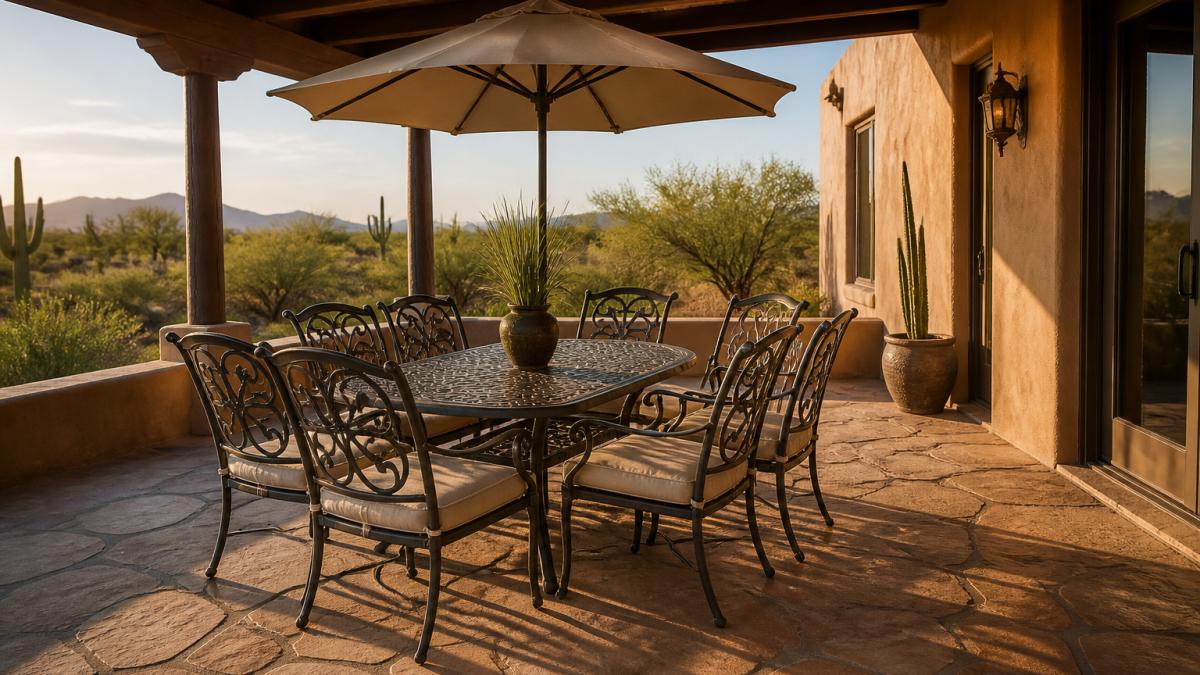
Cushions are the second layer. A breathable outdoor cushion blocks direct skin contact with hot metal and adds comfort that bare iron never offers.
Third, rethink timing and layout. Position seating so the afternoon sun falls behind the house or a shade structure, and rotate umbrellas as the season shifts.
This is where working with a specialist pays off.
Conclusion
The challenge with iron in this climate isn’t durability; it’s comfort in direct sun. Solve the shade and cushion question first, and a wrought iron set becomes one of the smartest outdoor purchases you can make here.
If you want a set built for your specific patio, Molino Patio can help. We offer custom-built and factory-direct wrought iron furniture, pergolas for permanent shade, and installation throughout the state, all backed by a lifetime frame warranty and a price-matching policy.
Frequently Asked Questions
Does wrought iron patio furniture get too hot to sit on in Arizona heat?
Bare wrought iron in direct sun can reach surface temperatures well above ambient air, and dark finishes absorb more heat than light ones. In practice, that means bare metal can be uncomfortable to touch at midday in summer. The fix is straightforward: choose lighter finishes, add cushions, and place seating under shade or a covered patio. With those adjustments, wrought iron furniture stays usable through most of the day, and the hottest window is limited to peak afternoon sun.
Is wrought iron or aluminum better for hot-weather patio furniture?
Both handle heat, but they differ in weight and feel. Wrought iron is heavier, so it stays put in wind and feels more solid, which matters on exposed patios. Aluminum is lighter and easier to move, and it resists rust without a finish. For Arizona heat, the bigger factor is finish and shade rather than the base metal. Wrought iron patio furniture pros and cons usually come down to stability and weight versus portability, so pick based on how often you rearrange your space.
How do you keep wrought iron patio furniture from rusting?
Rust prevention starts with the finish. Powder coating creates a sealed barrier that keeps moisture off the metal, and touching up chips promptly stops corrosion from starting at exposed spots. Wipe down the frames a few times a season, dry them fully, and store or cover pieces during monsoon season when rain is heavy. Wrought iron patio furniture care is mostly about protecting that coating. Inspect joints and feet, since those areas collect water and are the first to show rust.
How long does wrought iron patio furniture last outdoors?
A well-made wrought iron frame with a quality powder coating can last many years outdoors, often decades with routine care. Lifespan depends on finish quality, exposure to direct sun and rain, and how consistently you maintain it. Frames typically outlast cushions and fabric, which fade and break down faster under intense UV exposure. That is why many buyers plan for cushion replacement every few years while keeping the same frame, which supports the long-term value argument for wrought iron.
