
Table of Contents
- What Makes Outdoor Cushions Durable
- Best Fabric for Outdoor Cushions
- Outdoor Cushion Filling Types and Density
- Outdoor Cushion Size and Thickness Specifications
- How to Clean Outdoor Cushions and Extend Their Life
- Key Durability Features to Compare
- Choosing Cushions Built to Last
- Frequently Asked Questions
Last Updated: October 11, 2026
What Makes Outdoor Cushions Durable
Durable outdoor cushions resist fading, moisture, and mold while maintaining their shape and comfort for years. At Molino Patio, we’ve spent over 30 years helping Arizona homeowners and businesses select cushions that actually last through intense sun and heat cycles.
The key to durability lies in three factors: the fabric’s weather-resistant properties, the foam’s density and moisture management, and the overall construction quality. A cushion that checks all three boxes will serve you for years.
The best approach is to evaluate cushions across multiple specifications rather than picking based on appearance alone. This guide walks you through exactly what to look for.
Best Fabric for Outdoor Cushions
The fabric you choose determines how well your cushions resist UV damage, water, and mold. Not all outdoor fabrics perform equally, and cheaper options fade quickly in direct Arizona sun.
Solution-Dyed Acrylic Fabrics
Solution-dyed acrylic is the gold standard for outdoor cushion fabric. The color is added during fiber production, not applied to the surface, so it resists fading far better than painted fabrics.
This fabric type sheds water naturally and resists mold and mildew growth. It also feels soft and maintains that feel through years of use. Solution-dyed acrylic typically costs more upfront, but the longevity justifies the investment.
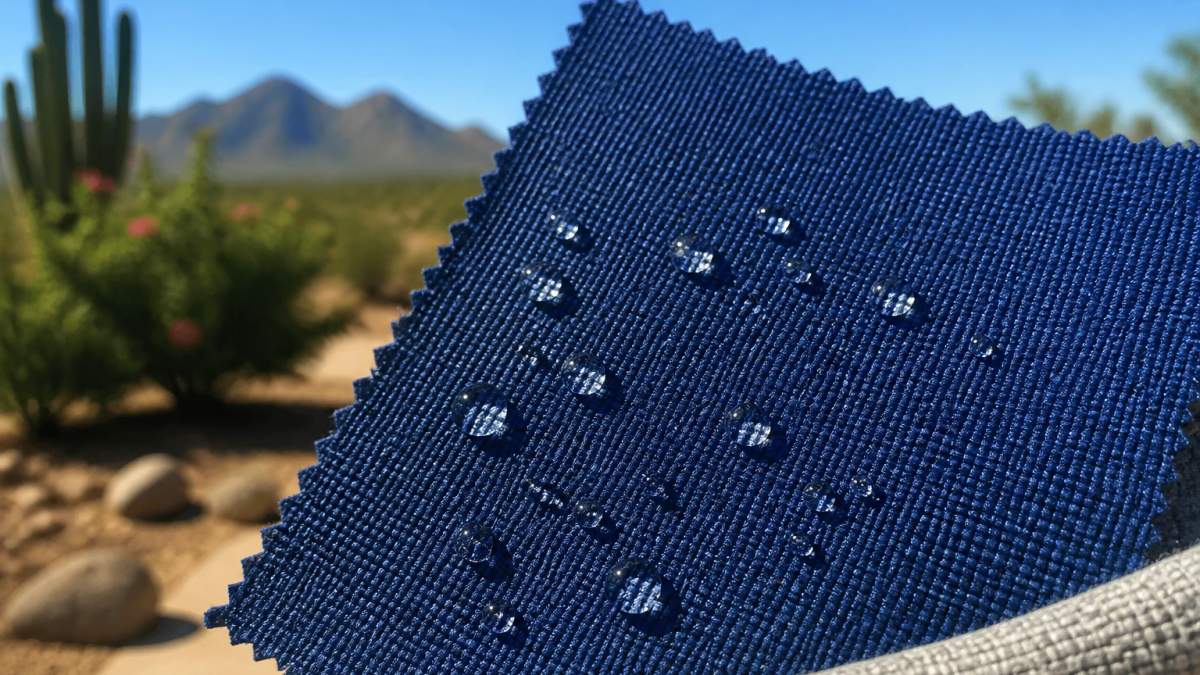
Look for acrylic fabrics with a weight of 5-7 ounces per square yard. Higher weight means better durability.
Polyester and Olefin Options
Polyester and olefin are more affordable alternatives to acrylic. Both shed water and resist mold reasonably well, but they fade faster in intense sun.
Polyester holds up better than olefin for outdoor use. It resists abrasion and maintains its shape longer. Olefin is the budget choice and works fine for covered patios or seasonal use.
Neither fabric matches solution-dyed acrylic’s lifespan.
Weather-Resistant Performance Standards
Weather-resistant fabrics are tested for colorfastness, water repellency, and abrasion resistance. Look for fabrics rated for outdoor use with documented performance specs.
Colorfastness ratings tell you how much a fabric fades under UV exposure. A rating of 7 or higher on the AATCC scale indicates excellent fade resistance.
Water repellency matters for moisture management. Fabrics treated with water-repellent coatings shed rain and spills quickly, reducing mold risk. This coating degrades over time, so expect to reapply treatments every 2-3 years on lower-quality fabrics.
Outdoor Cushion Filling Types and Density
The foam inside your cushion affects both comfort and durability. Cheap foam compresses quickly and absorbs moisture, leading to mold and loss of shape.
Foam Density and Firmness Ratings
Foam density is measured in pounds per cubic foot. Higher density means the foam lasts longer and resists compression.
Outdoor cushion foam typically ranges from 1.5 to 3 pounds per cubic foot. Foam at 2.5-3 lbs/cubic foot maintains its shape for years.
Firmness and density are different. A firm cushion with low density will feel good initially but will flatten quickly. A softer cushion with high density will stay comfortable and supportive longer. Molino Patio’s outdoor cushions use 2.5+ lbs/cubic foot foam with medium firmness.
Moisture Management and Drainage
Outdoor foam must drain and dry quickly. Foam that traps moisture develops mold and breaks down faster.
Quality outdoor cushions use open-cell foam wrapped in a waterproof barrier or drainage layer. This design lets water flow through the foam without pooling. The waterproof wrap prevents the foam from absorbing moisture during heavy rain.
Some manufacturers use closed-cell foam, which resists water absorption but doesn’t drain as effectively. Open-cell foam with a drainage wrap is effective for outdoor use.
Cushions placed on slatted furniture dry faster than those on solid surfaces. Air circulation underneath prevents moisture from trapping underneath the cushion.
Outdoor Cushion Size and Thickness Specifications
Cushion thickness affects both comfort and durability. Thicker cushions distribute weight more evenly and resist compression better.
Standard outdoor cushions range from 4 to 6 inches thick. A 4-inch cushion works for occasional use or light-weight furniture. A 5-6 inch cushion is suitable for regular seating and heavier use.
Measure your furniture carefully before ordering. Cushions that don’t fit properly shift and wear unevenly. Molino Patio offers custom sizing to fit any patio furniture, including L-shaped and oddly proportioned pieces.
| Cushion Thickness | Best For | Typical Lifespan |
|---|---|---|
| 4 inches | Occasional use, lightweight furniture | 3-4 years |
| 5 inches | Regular family use, standard seating | 5-7 years |
| 6 inches | Heavy use, commercial settings | 7-10 years |
Thicker cushions are heavier and harder to move.
How to Clean Outdoor Cushions and Extend Their Life
Regular cleaning prevents mold, mildew, and staining. A simple maintenance routine keeps cushions looking new and extends their lifespan.
Brush off debris weekly. Dust and leaves trap moisture and promote mold growth. A soft brush removes surface dirt without damaging the fabric.
Wash cushions monthly with mild soap and water. Mix a few drops of dish soap into cool water and scrub gently with a soft brush. Rinse thoroughly and let air dry completely before using.
For stubborn stains, use a 10:1 water-to-bleach solution on solution-dyed acrylic fabrics only. Test on a hidden area first. Avoid bleach on polyester or olefin as it can damage the fibers.
Seasonal Storage and Protection
Proper storage during off-season months prevents unnecessary wear and extends cushion life.
Store cushions in a dry location during winter or extended periods of non-use. A sealed storage container or weatherproof bag keeps dust and moisture out. Never store damp cushions, as trapped moisture causes mold growth inside the storage container.
Use cushion covers during the off-season. A breathable cover protects from dust while allowing air circulation. Waterproof covers work too, but ensure the cushions are completely dry before sealing them.
If you leave cushions on furniture year-round, use protective covers during heavy rain or snow. Quality covers shed water and protect fabric from UV damage.
Key Durability Features to Compare
When shopping for durable outdoor cushions, evaluate these specific features side by side. Most buyers focus on fabric and foam but overlook construction quality, the seams, zippers, piping, and cover-to-foam fit that often determine whether a cushion lasts three years or seven.
Fabric and Foam Specifications
Fabric weight and colorfastness rating. Solution-dyed acrylic at 5-7 ounces per square yard with a colorfastness rating of 7+ and abrasion resistance of 15,000+ Wyzenbeek cycles offers excellent durability. Polyester at 6+ oz/sq yd is a reasonable middle ground.
Foam density and type. Open-cell foam at 2.5+ lbs/cubic foot with a waterproof drainage layer resists compression and mold better than closed-cell foam or low-density alternatives. 2.5-3 lbs/cubic foot foam maintains shape for years.
Cushion thickness. A 5-6 inch cushion distributes weight evenly and resists compression. Thicker cushions are heavier but can offer extended durability.
Construction Quality and Failure Points
Fabric and foam quality matter little if seams fail, zippers break, or the cover separates from the insert. Examine these construction details:
Seams and stitching. Durable cushions use double-stitched seams with thread rated for outdoor use (polyester or nylon). Ask whether seams are sealed or reinforced; sealed seams resist water infiltration and mold growth.
Zippers and closures. Removable covers are convenient for cleaning and replacement, but zippers are a common failure point. High-quality outdoor cushions use heavy-duty, corrosion-resistant zippers (often YKK or similar marine-grade brands). If a cushion has a removable cover, test the zipper action; it should glide smoothly without resistance.
Piping and edging. Piping (the cord trim around cushion edges) protects seams and adds structure. Piping made from the same solution-dyed acrylic as the cover offers enhanced durability. Welted or reinforced edges resist fraying.
Backing and cover-to-foam fit. The back of the cushion cover should be reinforced or backed with a durable fabric to prevent wear from friction against furniture. The cover should fit snugly around the foam insert without bunching or gaps; loose covers shift during use and wear unevenly.
Zipper placement. Zippers on the bottom or side of the cushion are less exposed to sun and water than zippers on the top. Bottom-zip designs can offer extended zipper lifespan compared to top-zip designs.
Repairability and Replacement Economics
A durable cushion is only cost-effective if you can repair or replace worn parts without replacing the entire cushion.
Removable covers. Cushions with zippered, removable covers allow you to replace just the fabric if it fades or stains before the foam wears out. This extends the effective lifespan and can reduce long-term cost.
Refillable inserts. Some premium cushions use refillable foam inserts, allowing you to replace the foam without buying a new cover. This is less common but valuable for high-use seating.
Warranty coverage. A warranty backs the manufacturer’s durability claims and indicates confidence in construction. Look for warranties that cover:
- Fabric fading or discoloration (typically 3-5 years)
- Foam compression or loss of shape (typically 5-7 years)
- Seam or zipper failure (typically 2-3 years)
- Mold or mildew (typically 1-2 years)
Warranties that cover only manufacturing defects are less valuable than those covering material degradation. A 5-year comprehensive warranty indicates confidence in the cushion’s durability under normal use.
Cost-Per-Year Analysis
Compare cushions using cost-per-year rather than upfront price alone:
A premium cushion with quality fabric, foam, and construction can offer better value over time than a budget alternative. Factor in replacement labor, storage, and disposal costs when calculating true cost of ownership.
Choosing Cushions Built to Last
The most durable outdoor cushions combine solution-dyed acrylic fabric, high-density foam, and thoughtful construction. They can offer long-term value.
Molino Patio specializes in durable outdoor cushions designed for Arizona’s intense sun and heat. Our cushions use solution-dyed acrylic fabric, 2.5+ lbs/cubic foot foam, and waterproof drainage layers. We also offer custom sizing and removable covers, so you can replace just the fabric if it wears out before the foam.
Measure your furniture twice before ordering custom cushions. Cushions that don’t fit properly shift during use and wear unevenly, reducing their lifespan by 1-2 years. Molino Patio’s team verifies all measurements before production to ensure perfect fit.
Compare cushions across fabric type, foam density, thickness, and warranty coverage rather than price alone.
According to the Outdoor Industry Association, proper cushion selection and maintenance is the most cost-effective way to extend outdoor furniture lifespan. Consumer Reports testing on outdoor fabrics confirms that solution-dyed acrylic fabrics resist fading 3-4 times longer than painted alternatives. The American Society for Testing and Materials standards for outdoor textiles defines the performance ratings used across the industry.
Frequently Asked Questions
What is the most durable fabric for durable outdoor cushions?
Solution-dyed acrylic fabrics offer the best combination of durability and UV resistance for outdoor cushions. The dye is woven into the fiber itself, preventing fading even after years of sun exposure. Polyester and olefin are also weather-resistant options, but solution-dyed acrylic typically provides superior colorfastness and longer lifespan. Look for fabrics with high abrasion resistance ratings and water-repellent treatments for maximum durability.
What type of outdoor cushion filling is best for durability?
High-density foam (2.5 to 3 pounds per cubic foot) is the standard for durable outdoor cushions. This density level provides firm support, resists compression over time, and drains water effectively. Look for foam with a waterproof wrap or moisture-resistant core to prevent mold and mildew growth. Cushions with proper drainage channels and quick-drying foam will maintain their shape and integrity through multiple seasons of regular use.
How do I know if outdoor cushions will dry quickly after rain?
Check the foam density and construction details. Durable outdoor cushions use open-cell foam with drainage channels that allow water to pass through rather than absorb. The fabric should be water-repellent (not waterproof, which traps moisture). Cushion thickness between 4 to 6 inches balances comfort with faster drying. A quality waterproof wrap around the foam core prevents saturation while allowing the exterior to dry within a few hours in sun and breeze.
How should I clean and maintain outdoor cushions to keep them durable?
Clean cushions monthly with mild soap and water using a soft brush, then rinse thoroughly and air dry. Store cushions indoors during winter or cover them with breathable protective covers to prevent moisture buildup. Rotate cushions regularly to ensure even wear, and inspect seams and fabric for damage annually. Proper maintenance significantly extends the life of durable outdoor cushions and prevents premature deterioration.
Choosing durable outdoor cushions means investing in quality fabrics, high-density foam, and proper sizing. Molino Patio’s custom cushions are built to withstand Arizona’s extreme sun and heat while maintaining comfort and appearance for years. With over 30 years of experience, we help homeowners and businesses select cushions that deliver real value. Get started with Molino Patio and choose outdoor cushions built to last.
