
Table of Contents
- What Makes High Quality Wrought Iron Patio Furniture Stand Out
- Wrought Iron vs Cast Aluminum Patio Furniture: Material Comparison
- Evaluating Construction Quality and Durability
- Wrought Iron Patio Chairs: Comfort, Style, and Longevity
- How to Care for Wrought Iron Patio Furniture Year-Round
- Wrought Iron Furniture Rust Prevention: Techniques That Work
- Choosing the Right Wrought Iron Patio Furniture for Your Space
- Frequently Asked Questions
Last Updated: October 8, 2026
What Makes High Quality Wrought Iron Patio Furniture Stand Out
High quality wrought iron patio furniture combines authentic materials, expert craftsmanship, and durable finishes designed to withstand intense outdoor conditions. At Molino Patio, we’ve spent over 30 years understanding what separates furniture that lasts decades from pieces that deteriorate within a few seasons.
The foundation of quality starts with the metal itself. Genuine wrought iron is hand-forged and shaped, creating dense, strong pieces that resist bending and warping. The process requires skill, each curve, scroll, and joint reflects the metalworker’s expertise. This differs fundamentally from cast aluminum or stamped metal alternatives that may look similar but lack the structural integrity and longevity.
Beyond the metal, finish quality matters enormously. A proper finish protects against rust and UV degradation. High-quality wrought iron patio furniture receives multiple layers of preparation, primer, and topcoat paint designed to bond permanently to the metal surface. This multi-step finishing process is what keeps pieces looking good year after year, even in harsh climates.
Construction details reveal quality too. Look at how pieces are joined. Quality wrought iron uses welded connections that are ground smooth and sealed, not bolted assemblies that loosen over time. The cushion construction, if included, should use weather-resistant fabrics and high-density foam that resists mold and mildew.
When evaluating any wrought iron patio furniture, run your hand over welds and joints. Smooth, seamless connections indicate quality craftsmanship. Rough or unfinished welds suggest shortcuts in production.
Wrought Iron vs Cast Aluminum Patio Furniture: Material Comparison
The choice between wrought iron and cast aluminum shapes your furniture’s performance, maintenance needs, and lifespan. Understanding these materials helps you make an informed decision for your outdoor space.
Wrought iron is hand-forged metal that’s shaped through heat and hammering. This process creates a dense, strong material with superior structural integrity. Genuine wrought iron resists rust when properly finished, and repairs are straightforward, welding can fix damage without replacing entire pieces.
Cast aluminum mimics the appearance of wrought iron but uses a different manufacturing process. Molten aluminum is poured into molds, creating pieces that look similar but weigh significantly less. The trade-off: cast aluminum is more prone to cracking under stress, and repairs typically mean replacing the damaged section rather than welding it.
Here’s where the practical differences emerge:
| Aspect | Wrought Iron | Cast Aluminum |
|---|---|---|
| Weight | Heavier, requires sturdy support | Lightweight, easier to move |
| Durability | 20-30+ years with proper care | 5-15 years typically |
| Repairability | Weldable, can be refinished | Often requires replacement |
| Rust Resistance | Excellent when finished properly | Naturally rust-resistant |
| Cost | Higher initial investment | Lower upfront cost |
| Maintenance | Regular cleaning and touch-ups | Minimal maintenance needed |
Wrought iron demands more attention but rewards you with longevity. Cast aluminum requires less work but won’t last as long. For properties in harsh climates with intense sun exposure, common in Arizona, wrought iron’s durability justifies the extra care.
Choose wrought iron if you want furniture that lasts 25+ years and can be repaired. Choose cast aluminum if you prioritize lightweight pieces and minimal maintenance, accepting a shorter lifespan.
Evaluating Construction Quality and Durability
Solid construction separates furniture that holds up from pieces that fail prematurely. When you’re evaluating wrought iron patio furniture, specific details tell the story of how long it will last.
Start with the frame joints. High-quality pieces use welded connections throughout. Each weld should be smooth, ground flush, and sealed with primer and paint. If you see bolted connections, that’s a red flag, bolts loosen over time, creating wobble and structural weakness. Press on joints gently; quality furniture should feel rock-solid with no flex or movement.
The metal gauge matters too. Thicker metal (lower gauge numbers) means stronger pieces.
Welds tell you about the manufacturer’s standards. Examine where pieces connect. Quality welds are continuous, smooth, and properly sealed. Spotty welds or visible gaps indicate rushed production. A manufacturer willing to cut corners on welds will cut corners elsewhere too.
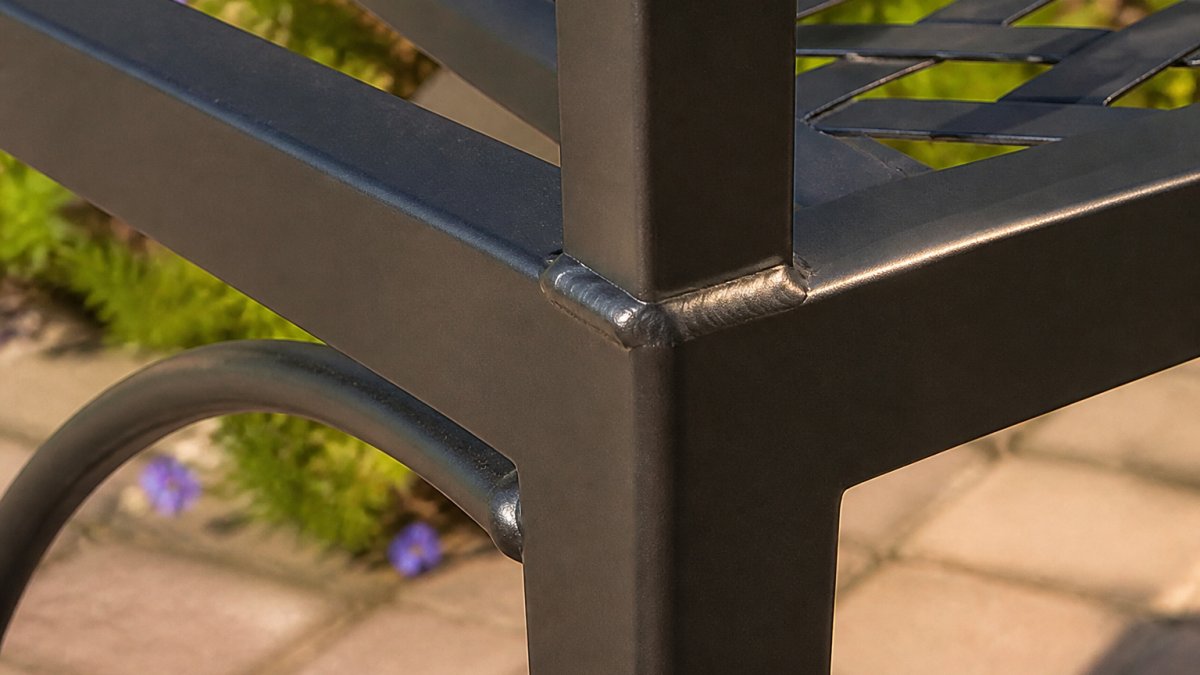
Check the finish system. Quality wrought iron receives multiple layers: bare metal preparation, rust-inhibiting primer, and durable topcoat paint. Run your finger along surfaces, they should feel smooth, not rough or sticky. Paint should be uniformly applied with no drips, runs, or thin spots.
For cushioned pieces, examine the cushion construction. Quality cushions use high-density foam (at least 2 pounds per cubic foot) wrapped in solution-dyed acrylic fabric. These materials resist fading and mold. Budget cushions use low-density foam that compresses quickly and fabric that fades easily.
Weight is an indicator too. Solid wrought iron pieces feel substantial. If a chair feels unusually light, the metal may be thinner than it appears. Genuine wrought iron patio furniture has real heft, it’s designed to stay put in wind and support users reliably.
Wrought Iron Patio Chairs: Comfort, Style, and Longevity
Patio chairs are the workhorses of outdoor furniture. They get used more than any other piece, so comfort and durability become critical.
Quality wrought iron patio chairs balance several factors.
The frame design affects comfort significantly. Curved backrests provide better support than flat ones. Contoured seats distribute weight more evenly than flat seats. If possible, sit in the chair before buying. Your body will tell you whether the proportions work for you.
Style options range widely. Classic designs with scrollwork and ornamental details evoke traditional elegance. Contemporary styles feature cleaner lines and minimal ornamentation. Traditional bistro-style chairs work well in smaller spaces. The style should complement your outdoor space and home architecture.
Wrought iron patio chairs work best for permanent or semi-permanent outdoor installations where durability matters more than portability. They’re ideal for patios, gardens, and hospitality settings where furniture stays in place.
Cushion options enhance comfort. Outdoor cushions filled with weather-resistant foam and covered in solution-dyed acrylic fabric provide comfort while resisting fading and mold.
How to Care for Wrought Iron Patio Furniture Year-Round
Proper maintenance keeps wrought iron patio furniture looking good and functioning well for decades. The investment in care pays back through extended lifespan and preserved appearance.
Spring Maintenance: After winter, inspect pieces for damage. Look for rust spots, paint chips, or loose connections. Clean thoroughly with mild soap and water, using a soft brush to remove dirt and debris. Dry completely with a soft cloth. This is the time to touch up any paint damage before the season progresses.
Summer Care: During active use, wipe down furniture regularly with a damp cloth. This removes dust, pollen, and salt spray that can accumulate and damage the finish. Keep cushions dry; remove them during heavy rain. If you live near the ocean, rinse furniture with fresh water occasionally to remove salt spray.
Fall Preparation: As temperatures drop, clean furniture thoroughly and inspect for damage. Store cushions indoors in a dry location.
Winter Storage: If you’re in a region with harsh winters, consider storing wrought iron patio furniture indoors or under a heavy cover. If it stays outside, ensure it’s protected from standing water, which accelerates rust. Cover pieces with breathable tarps, plastic traps moisture and promotes rust.
Never use pressure washers on wrought iron patio furniture. High-pressure water forces moisture into joints and under the finish, promoting rust from inside. Soft brushes and mild soap work better and cause no damage.
Wrought Iron Furniture Rust Prevention: Techniques That Work
Rust is the enemy of wrought iron, but prevention is straightforward when you understand the mechanism. Rust forms when iron contacts oxygen and moisture. Interrupt that process and rust won’t develop.
The finish is your primary defense. A quality paint system creates a barrier between the metal and the environment. This is why finish quality matters so much. Even tiny gaps in the finish allow rust to start. Touch up paint chips immediately, don’t wait until rust develops.
Moisture management is critical. Ensure water doesn’t pool on horizontal surfaces. Tilt cushions or covers slightly so water runs off rather than sitting. After rain, wipe down pieces with a dry cloth. In humid climates, air circulation helps; don’t position furniture in enclosed spaces where moisture lingers.
If rust does appear, address it immediately. Light surface rust can be removed with fine steel wool or a rust-removing product, then touched up with paint. Deep rust that pits the metal is harder to fix, it may require professional refinishing or replacement of that component.
Storage prevents rust effectively. If you can store wrought iron patio furniture indoors during off-season months, do so. A dry garage or shed is ideal. If indoor storage isn’t possible, use a breathable cover that allows air circulation while protecting from rain.
Choosing the Right Wrought Iron Patio Furniture for Your Space
The best wrought iron patio furniture matches your space, climate, and lifestyle. Making the right choice requires honest assessment of your needs.
Climate Considerations: Intense sun exposure, like Arizona experiences, requires finish systems specifically formulated for UV protection. Salt spray in coastal areas demands rust-resistant finishes. High humidity promotes mold on cushions, choose solution-dyed fabrics and ensure good air circulation.
Space Planning: Measure your patio or garden carefully. Account for foot traffic paths and clearance around the space. Oversized furniture in a small space feels cramped; undersized pieces in a large area look lost. Consider how you’ll use the space, dining furniture requires different layouts than lounging areas.
Functional Needs: Do you need dining sets, lounge seating, or both? Will you use cushions or prefer low-maintenance bare metal? Do you entertain frequently, requiring multiple chairs, or is this a personal retreat? Hospitality businesses need heavy-duty, low-maintenance pieces that withstand constant use.
Style Integration: Your outdoor furniture should complement your home’s architecture and interior style. Traditional homes pair well with ornamental wrought iron designs. Contemporary homes work better with cleaner-lined pieces. Don’t let furniture overwhelm the space, it should enhance, not dominate.
Budget and Value: Quality wrought iron patio furniture costs more upfront than alternatives, but the long-term value is superior. A piece lasting 25 years costs less per year than furniture lasting 5 years, even at a higher initial price. Consider total cost of ownership, not just purchase price.
Custom Options: For unusual spaces or specific requirements, custom-built pieces solve problems that stock furniture can’t. Molino Patio offers custom-made solutions tailored to your exact needs, including flexible financing options like interest-free 90-day financing to spread costs.
Selecting high quality wrought iron patio furniture is an investment in your outdoor living space. The durability, aesthetic appeal, and functionality of well-made pieces transform how you use and enjoy your patio.
Frequently Asked Questions
How can you tell if wrought iron patio furniture is high quality?
High quality wrought iron patio furniture shows consistent welds with no gaps or rough spots, has a smooth finish without rust spots or discoloration, and uses solid metal frames rather than hollow tubing. The metal should feel substantial when you tap it, not hollow or thin. Check that joints are reinforced and that the piece sits level without wobbling. Reputable manufacturers provide detailed construction specifications and warranty information that demonstrates confidence in their craftsmanship.
What’s the difference between wrought iron vs cast aluminum patio furniture?
Wrought iron is forged metal that’s hammered and shaped, making it denser, heavier, and more durable long-term. Cast aluminum is poured into molds, making it lighter and easier to move, but it’s less resistant to impact and weather extremes. Wrought iron requires more maintenance to prevent rust but lasts decades with proper care. Cast aluminum resists rust naturally but may corrode differently and typically doesn’t last as long. For intense sun exposure and longevity, solid wrought iron outperforms cast aluminum.
How do you prevent wrought iron patio furniture from rusting?
Apply a protective finish like powder coating or paint that creates a barrier against moisture. Clean your furniture regularly to remove dirt and debris that can trap water. After rain or washing, dry the pieces thoroughly, paying special attention to crevices and joints. Use furniture covers during off-season storage or extended periods of non-use. For existing rust, sand the affected area and reapply finish. Proper ventilation in your storage area also reduces rust risk by minimizing moisture accumulation.
How long does wrought iron patio furniture last?
High quality wrought iron patio furniture can last 20-30 years or longer when properly maintained. The metal frame itself is extremely durable and can withstand decades of use. Cushions typically last 5-7 years depending on sun exposure and care. Regular maintenance, cleaning, protective coatings, and rust prevention, extends the lifespan significantly. Pieces left unprotected or exposed to harsh conditions without care may show deterioration within 5-10 years. Quality construction, proper finish application, and consistent maintenance are the primary factors that determine how long your investment will serve your outdoor space.
