
Table of Contents
- Why Custom Pergola Design Matters in Desert Climates
- Pergola Design Ideas for Desert Homes
- 1. East-Facing Louvered Roof for Morning Shade
- 2. West-Facing Adjustable Slats to Block Afternoon Heat
- 3. Integrated Shade Cloth Overlay for Maximum UV Protection
- 4. Dual-Level Design with Outdoor Kitchen Integration
- 5. Contemporary Metal Frame with Angled Slats
- 6. Rustic Wood Pergola with Climbing Vines for Natural Cooling
- 7. Deck-Mounted Design with Integrated Drainage
- Best Pergola Materials for Hot Climates
- Pergola Shade Options and Sun Exposure Planning
- Understanding Custom Pergola Cost and Budget Planning
- Permits, Codes, and Structural Considerations
- Drainage, Landscape Integration, and Maintenance
- Frequently Asked Questions
Last Updated: October 17, 2026
Why Custom Pergola Design Matters in Desert Climates
A custom pergola design for desert homes solves a real problem: standard outdoor structures fail in extreme heat and intense sun. Off-the-shelf pergolas weren’t built for sustained 110-degree temperatures, relentless UV exposure, and the dust storms that come with desert living. They fade, warp, and deteriorate faster than you’d expect.
At Molino Patio, we’ve spent over 30 years working with homeowners and property managers who face these exact challenges. The difference between a pergola that lasts 5 years and one that lasts 25 comes down to three things: material choice, shade design, and how you position it on your property.
A well-designed custom pergola becomes an extension of your home. It creates a comfortable outdoor living space when temperatures soar. It protects furniture, reduces cooling costs inside, and adds real value to your property. But it only works if you design it with desert conditions in mind from day one.
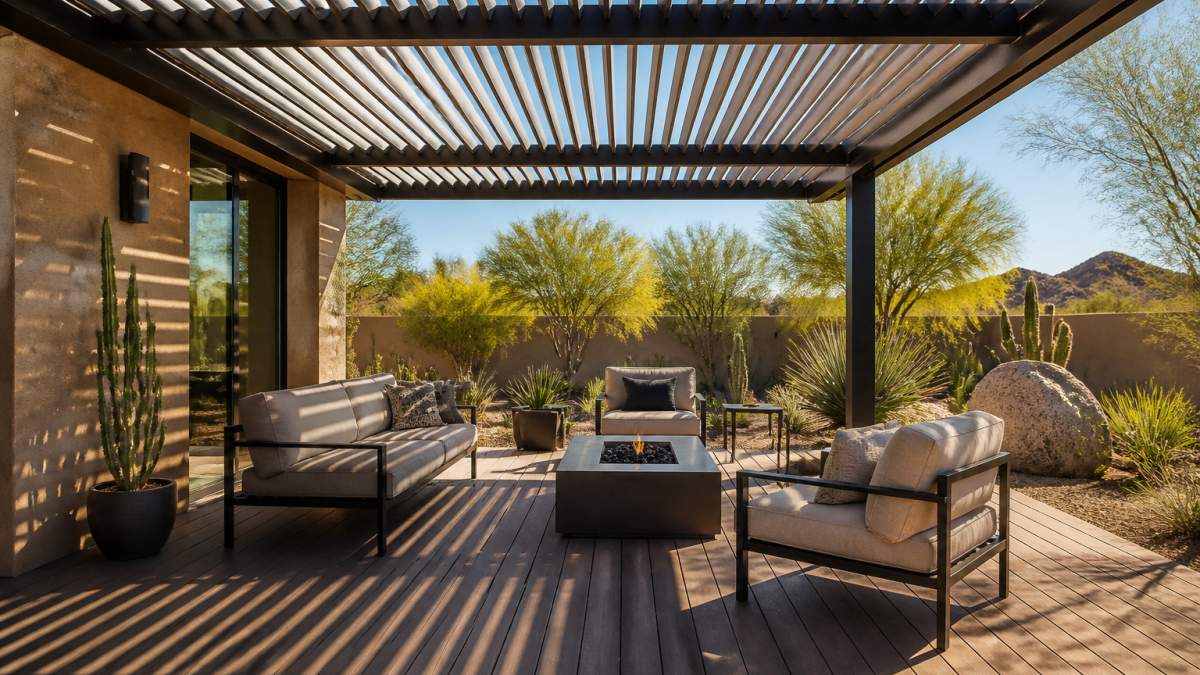
Pergola Design Ideas for Desert Homes
Here are seven proven custom pergola design approaches that work in hot, dry climates. Each addresses a specific challenge desert homeowners face.
1. East-Facing Louvered Roof for Morning Shade
An east-facing louvered pergola with adjustable slats captures morning sun while blocking the harsh afternoon rays. The slats rotate to follow the sun’s path throughout the day. This design works because morning sun is gentler. You get natural light and warmth when you want it. By noon, the slats close to block heat before it peaks.
Best for: patios used for breakfast or morning entertaining. Louvered roofs cost more upfront but save money on cooling. They also extend the usable hours of your outdoor space.
2. West-Facing Adjustable Slats to Block Afternoon Heat
West-facing exposure gets the worst afternoon sun. A custom pergola with adjustable slats here is essential. The slats stay mostly closed from 2 p.m. onward. This blocks 70-80% of direct heat while still allowing airflow.
Adjustable systems let you change the angle seasonally. Winter sun is lower, so you open the slats more. Summer sun is higher, so you close them tighter. This simple adjustment extends your outdoor living season by months.
3. Integrated Shade Cloth Overlay for Maximum UV Protection
Shade cloth adds a physical barrier against UV rays. A custom pergola design for desert homes often includes a retractable shade cloth system mounted above the slats or beams. High-quality shade cloth blocks 80-90% of UV radiation while still allowing light and air to pass through.
The cloth is removable for winter when you want more sun. It’s washable and lasts 5-7 years before fading. Many homeowners pair shade cloth with louvered roofs for maximum flexibility. You get shade when you need it and open sky when you don’t.
4. Dual-Level Design with Outdoor Kitchen Integration
A dual-level pergola creates two distinct zones. The lower level sits at deck height and covers seating or dining. The upper level extends higher and can cover an outdoor kitchen area. This design works because heat rises. Your cooking area gets better air circulation while the seating area below stays cooler.
Outdoor kitchens under pergolas see less direct heat on appliances and countertops. Food stays fresher longer. Your grill and prep surfaces last longer because they’re protected from UV. This design also creates visual interest and defines your outdoor living space.
5. Contemporary Metal Frame with Angled Slats
Modern custom pergola design often uses aluminum or steel frames with angled slats. The slats aren’t horizontal. They’re pitched at 15-30 degrees to shed water and debris while still blocking sun. This contemporary style matches modern home architecture.
Metal frames resist rust better than wood in desert climates. Aluminum doesn’t absorb heat the way wood does. The angled slat design improves drainage during rare desert storms. It also creates dynamic shadow patterns that change throughout the day.
6. Rustic Wood Pergola with Climbing Vines for Natural Cooling
A rustic wood pergola design for desert homes works when you add living elements. Fast-growing vines like desert-adapted clematis or trumpet vine create natural shade. The plants cool through evapotranspiration. They release moisture that lowers the temperature beneath the pergola by 5-10 degrees.
Wood pergolas need proper finishing for desert durability. Use exterior-grade stains rated for UV protection. Treat the wood every 2-3 years. Vines require irrigation in the desert, but the cooling benefit and aesthetic payoff are worth it for many homeowners.
7. Deck-Mounted Design with Integrated Drainage
A deck-mounted pergola anchors directly to your existing patio or deck structure. This design saves on foundation costs. Integrated drainage channels direct water away from seating areas. In the desert, this matters during monsoon season when rain falls fast and hard.
Proper drainage prevents pooling and extends the life of your deck. It also keeps the area underneath usable even during storms. This custom pergola design works best when your deck is already structurally sound and properly sloped.
Best Pergola Materials for Hot Climates
Material choice determines how long your pergola lasts and how much maintenance it requires.
Aluminum is the top choice for desert homes. It doesn’t rust, doesn’t absorb heat like wood, and requires minimal maintenance. Aluminum frames can be powder-coated in any color. The finish lasts 10-15 years before needing touch-ups.
Vinyl offers similar benefits to aluminum with softer styling options. Vinyl doesn’t fade as quickly as wood. It won’t splinter or crack in extreme heat swings. Vinyl is lighter than aluminum, which matters for installation.
Fiberglass works well for custom pergola designs that need strength without weight. Fiberglass won’t rust or rot. It handles UV exposure better than wood. The material is less common but increasingly popular for high-end custom builds. Cost is higher than aluminum or vinyl.
Wood requires commitment. Cedar and pressure-treated lumber are standard choices. Wood absorbs and radiates heat, which can feel uncomfortable underneath. It needs sealing every 2-3 years to resist UV damage and moisture. In the desert, wood can crack and warp from temperature swings.
Molino Patio specializes in custom aluminum and vinyl pergolas built to withstand Arizona’s extreme conditions.
Pergola Shade Options and Sun Exposure Planning
Shade coverage depends on your pergola’s orientation and the time of year. The sun’s path changes dramatically between winter and summer in desert regions.
Summer sun in the desert peaks at 85-90 degrees above the horizon at noon. A south-facing pergola needs dense shade to be comfortable.
Winter sun sits much lower in the sky, around 35-40 degrees. A pergola that blocks summer sun might block too much winter light. This is why adjustable slats and removable shade cloth matter.
Shade cloth density ranges from 30% to 90% UV block. A 50% shade cloth is typical for most patios. It blocks enough heat but still lets light through for visibility.
Vine coverage adds natural shade but takes 2-3 years to establish. Desert-adapted vines grow slower than vines in humid climates. The payoff is worth the wait. Living shade cools through evaporation and creates habitat for birds and pollinators.
Planning shade by sun exposure means understanding your specific microclimate. A patio on the north side of your house stays naturally cooler. One on the west side gets hammered by afternoon heat.
Understanding Custom Pergola Cost and Budget Planning
Custom pergola pricing depends on size, materials, complexity, and whether installation is included. Molino Patio offers flexible financing options including interest-free 90-day payment plans.
Size matters most. A 10×12-foot pergola costs less than a 16×20-foot design. Larger structures need stronger materials and deeper anchoring. Doubling the footprint often increases cost by 40-60%, not 100%.
Material selection is your second biggest cost driver. Vinyl and aluminum cost more upfront than wood but last longer and need less maintenance.
Adjustable features add cost. Fixed slats are cheaper than motorized louvered systems. Retractable shade cloth systems cost more than permanent shade cloth.
Installation complexity varies. A pergola mounted to an existing deck is simpler than one requiring new footings. Electrical work for motorized systems adds cost.
Lifecycle costs matter more than initial price. A cheaper wood pergola might cost $3,000 upfront but need $500-800 in maintenance annually. A quality aluminum pergola might cost $6,000-8,000 but need almost no maintenance.
At Molino Patio, we help customers understand total cost of ownership. We offer price matching. Our interest-free financing spreads payments over 90 days.
Permits, Codes, and Structural Considerations
Most pergolas require a building permit if they’re attached to your home or sit on a permanent foundation. Freestanding pergolas under 200 square feet sometimes don’t need permits, but this varies by jurisdiction.
Structural requirements depend on wind load and snow load calculations. The desert gets monsoon winds that can exceed 60 mph. Your pergola needs proper anchoring to handle wind forces. Footings should go 3-4 feet deep in most desert soils.
HOA rules apply in many residential communities. Some HOAs restrict pergola height, color, or materials. Get approval before building. Molino Patio has experience navigating HOA requirements and can help you design something that meets both your needs and community standards.
Electrical codes apply if you’re adding lights or motorized systems. Outdoor wiring must be rated for your climate. GFCI protection is required for any outlets. Hire a licensed electrician for this work.
Wind and load ratings matter in the desert. Your pergola should be rated for at least the 3-second gust wind speed in your area. Most desert locations require 90+ mph ratings. Proper engineering ensures your structure stays safe during storms.
Drainage, Landscape Integration, and Maintenance
Desert pergolas need drainage systems because monsoon season brings heavy rain. Water should flow away from seating areas and your home’s foundation. Integrated gutters or sloped designs direct water to appropriate runoff areas.
Landscape integration means choosing plants and ground cover that work with your pergola. Shade-tolerant plants grow underneath. Drought-resistant vines climb your structure. Desert-adapted ground covers reduce water needs while improving aesthetics.
Maintenance schedules vary by material. Aluminum needs occasional washing and inspection of fasteners. Vinyl requires similar care. Wood needs sealing every 2-3 years and annual inspection for damage.
Seasonal preparation protects your investment. Before summer, ensure shade systems are clean and working. Before monsoon season, check drainage and secure any loose components. Before winter, inspect for damage from the previous season.
Building a custom pergola design for desert homes requires thinking beyond aesthetics. You’re creating a structure that needs to handle extreme heat, intense UV, wind, and rare but intense storms.
Molino Patio brings over 30 years of experience designing and building custom pergolas for desert climates.
Frequently Asked Questions
Which pergola materials hold up best in intense desert sun?
Aluminum and vinyl outperform wood and fiberglass in extreme heat and UV exposure. Aluminum resists rust and requires minimal maintenance, while vinyl won’t fade or crack. Wood demands regular sealing and refinishing every 2-3 years to prevent warping. Fiberglass can become brittle under prolonged UV exposure. For desert climates, aluminum with powder-coated finishes offers the best durability and longest lifecycle.
How can I maximize shade when designing a pergola for my backyard?
Orientation is critical: east-facing pergolas provide morning shade, while west-facing designs block intense afternoon heat. Louvered roofs and adjustable slats let you control sun exposure by time of day. Adding shade cloth or retractable covers increases UV protection to 90%+. Positioning your pergola to align with your home’s architecture and considering tree placement nearby creates layered shade that reduces heat and improves comfort.
What should I consider when choosing a pergola cover for a desert home?
Desert-specific covers must handle extreme heat, dust, and occasional wind. Shade cloth (30-90% density) blocks UV while allowing airflow. Polycarbonate panels provide solid coverage and insulation but can trap heat. Retractable covers offer flexibility for entertaining and seasonal adjustments. Ensure drainage is built into your design to handle rare heavy rains. Material durability and ease of cleaning are essential since desert dust accumulates quickly on any outdoor structure.
Do you offer custom-size pergolas, and what does the process look like?
Yes, custom sizing is available to fit any backyard layout, including L-shaped patios, decks, or unusual spaces. The process starts with your specific dimensions and site conditions. Molino Patio works with you to design a pergola that matches your home’s architecture, meets local codes, and fits your budget. Delivery and installation timelines depend on customization complexity and current volume. Contact Molino Patio for a quote and timeline based on your exact requirements.
