
Table of Contents
- Why Custom Fire Tables Transform Your Backyard
- Outdoor Fire Table Ideas: Styles That Match Your Space
- Fire Table Size Guide: Choosing the Right Dimensions
- Gas Fire Table Design: Propane vs. Natural Gas
- Custom Fire Table Safety and Clearance Standards
- Building Your Custom Fire Table: A Practical Checklist
- Cost of Ownership and Warranty Protection
- Frequently Asked Questions
Last Updated: October 10, 2026
Why Custom Fire Tables Transform Your Backyard
A custom fire table is more than a functional heating element, it’s the centerpiece of outdoor entertaining that brings people together while adding visual warmth to your backyard space. Unlike off-the-shelf options, custom fire tables are designed specifically for your patio layout, aesthetic preferences, and fuel type, ensuring they integrate seamlessly into your outdoor living area.
At Molino Patio, we’ve spent over 30 years helping homeowners and commercial properties create outdoor spaces that withstand intense weather while remaining beautiful year-round. A well-designed custom fire table accomplishes what generic furniture cannot: it transforms how you use your backyard, extends your entertaining season, and becomes a focal point that guests remember.
The real advantage of custom fire tables isn’t just appearance, it’s that they’re built to your exact specifications. Your patio’s dimensions, your preferred fuel source, the materials that match your home’s exterior, and the seating arrangement you need are all factored in from the start.
Outdoor Fire Table Ideas: Styles That Match Your Space
Rectangular, Square, and Round Fire Tables
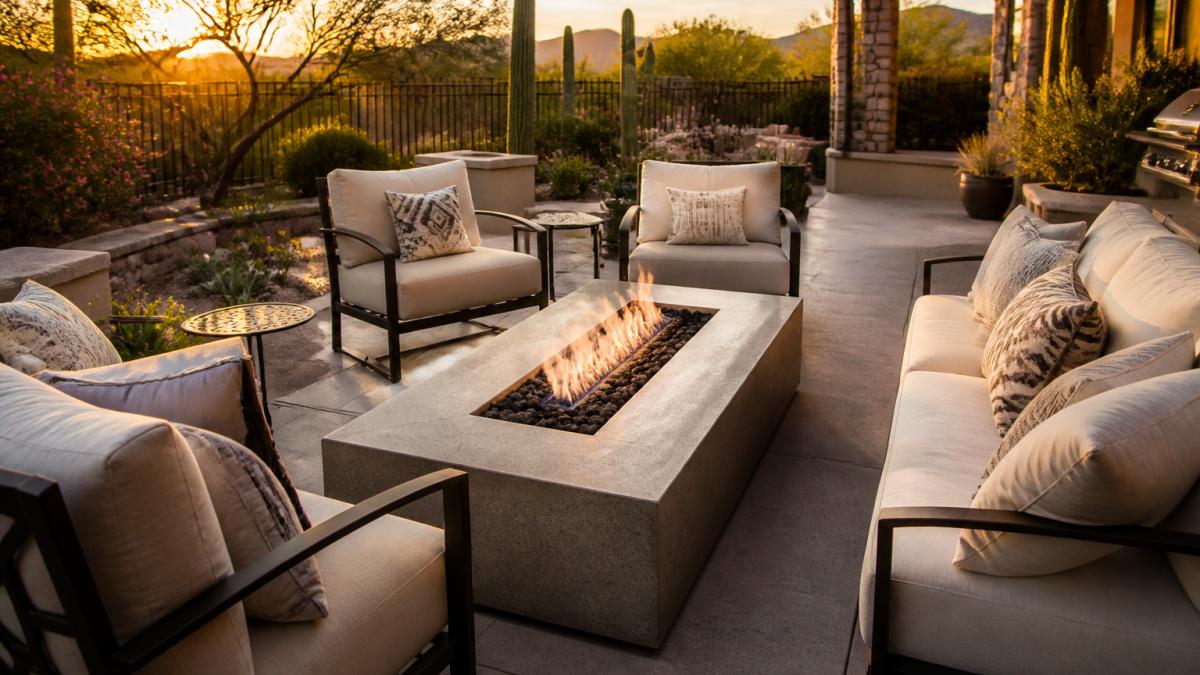
The shape of your fire table affects both function and how it fits into your patio layout. Rectangular fire tables work best for linear entertaining spaces where guests sit along two long sides, ideal for a dining-style arrangement. Square fire tables maximize seating efficiency in smaller patios and create a more intimate gathering space.
Each shape has practical implications. Rectangular designs typically accommodate 6-8 people comfortably and work well against house walls or as anchors for larger deck spaces. Square options fit snugly into corner patios or work as standalone features in medium-sized yards.
Material choices and finishes differ by shape as well. Rectangular and square tables are easier to construct from stone or concrete, while round designs benefit from metal frames with custom tops. Consider your backyard’s existing materials, stone patios pair naturally with stone fire tables, while modern decks suit metal-frame designs.
Materials and Finishes for Desert Durability
The Arizona sun’s intensity requires materials that resist fading, cracking, and deterioration. Natural stone, including limestone, granite, and slate, offers timeless appeal and exceptional durability when properly sealed. These materials develop character over time, with weathering that adds authenticity rather than detracting from appearance.
Concrete is a popular choice for custom fire tables because it’s versatile, affordable, and can be colored or stamped to match your design vision. High-quality concrete, when sealed annually, resists UV damage and temperature fluctuations that cause cracking.
Stainless steel and powder-coated metal finishes resist rust and maintain their appearance through multiple seasons. However, metal surfaces absorb and radiate heat more intensely than stone, so seating placement becomes critical. Wrought iron, a specialty at Molino Patio, combines durability with ornamental detail, the craftsmanship adds value that mass-produced options cannot match.
Avoid materials that trap moisture or require constant maintenance. Untreated wood, for example, splinters and warps in Arizona’s dry climate. Painted surfaces chip under UV exposure. The best materials for custom fire tables are those that age gracefully with minimal intervention.
Fire Table Size Guide: Choosing the Right Dimensions
Custom fire tables should be proportional to your seating area and backyard. A table that’s too small looks lost in a large patio; one that’s too large dominates a modest space and creates awkward traffic flow. The ideal size depends on how many people you typically entertain and how much open space surrounds your patio.
For intimate gatherings of 4-6 people, a 3-foot-diameter round table or a 3-by-4-foot rectangular table works well. For larger entertaining areas hosting 8-12 people, consider a 4-foot-diameter round table or a 4-by-6-foot rectangular design. These dimensions allow comfortable seating on all sides without forcing guests too close to the flame.
Seating Layout and Clearance Requirements
Safety clearances are non-negotiable when designing a custom fire table. The National Fire Protection Association recommends a minimum 10-foot clearance from structures like fences, pergolas, and overhanging eaves. This distance prevents heat damage and reduces fire risk.
Foot traffic patterns matter too. Position your fire table so people don’t walk directly behind seated guests or between the table and primary seating areas. An L-shaped patio, for example, benefits from a fire table positioned at the inside corner where it anchors the space without blocking movement.
Consider sight lines when arranging seating. Guests should see each other’s faces across the fire table, this is what creates the gathering experience. Asymmetrical seating (more chairs on one side than another) works if it follows your patio’s natural layout, but balanced arrangements feel more intentional and welcoming.
Gas Fire Table Design: Propane vs. Natural Gas
Burner Systems and Flame Features
Gas fire tables offer cleaner operation and more control than wood-burning options. Propane and natural gas both deliver consistent heat and flame, but they differ in installation, cost, and convenience.
Propane fire tables use a tank that you refill periodically, typically every 2-3 months depending on usage. This flexibility means you can install a propane table anywhere in your backyard without running utility lines.
Natural gas fire tables connect directly to your home’s gas line, eliminating tank management. Installation requires running a gas line to your patio, which involves permits and professional installation.
Burner systems vary in sophistication. Basic burners deliver a simple flame and consistent heat. Premium burner systems offer adjustable flame height, multiple flame patterns, and integrated ignition, features that enhance both ambiance and usability.
Fire glass or lava rock placed around the burner creates visual appeal and distributes heat more evenly.
Custom Fire Table Safety and Clearance Standards
Installation, Permits, and Fuel Connections
Most jurisdictions require permits for permanent fire table installations, particularly those using natural gas. Permits exist to ensure proper ventilation, safe fuel connections, and compliance with building codes. The permitting process typically takes 1-2 weeks and involves inspection after installation.
Professional installation is essential for gas fire tables. Improper gas connections create serious safety hazards, and many insurance policies require licensed installation for coverage. Natural gas connections must meet code specifications for line size, pressure regulation, and shut-off valve placement. Propane installations require secure tank mounting and proper hose routing away from foot traffic.
Electrical requirements depend on your burner system. Basic burners need no electricity, while ignition systems and adjustable flame controls require a 120-volt outlet. Weatherproof outlets should be installed at least 10 feet from the fire table to prevent water exposure. Many homeowners run conduit underground to hide electrical lines.
Maintenance and Year-Round Protection
Gas fire tables require minimal maintenance compared to wood-burning alternatives. Monthly checks should include inspecting burner function, testing ignition systems, and ensuring no debris blocks the flame. Propane tank connections should be checked seasonally for leaks using soapy water, bubbles indicate a leak that needs immediate attention.
Covers protect your fire table during off-season months and heavy rain. A fitted cover prevents water accumulation in the burner box and protects the table’s finish from UV exposure. Remove covers regularly to allow air circulation and prevent moisture buildup underneath.
Seasonal shutdowns involve turning off the gas supply at the tank or main line valve, allowing the system to purge, and covering the table. This process takes 15 minutes and prevents corrosion and gas line deterioration during months of non-use.
Building Your Custom Fire Table: A Practical Checklist
Creating a custom fire table requires planning across multiple dimensions. Use this checklist to guide your design process:
- Measure your patio dimensions and identify the ideal placement for your fire table
- Determine your preferred fuel type (propane, natural gas, or wood-burning)
- Verify clearance distances from structures, overhanging materials, and vegetation
- Choose your shape (rectangular, square, or round) based on your entertaining style
- Select materials and finishes that complement your home’s exterior
- Decide on burner features (adjustable flame, ignition type, heat output)
- Plan seating arrangement and confirm traffic flow around the table
- Identify utility connections needed (gas line, electrical outlet)
- Research local permit requirements and schedule inspections
- Get a professional quote that includes installation and warranty details
- Confirm delivery timeline and installation scheduling
- Review warranty coverage for frame and any cushioned components
This checklist keeps you focused on practical details that determine whether your custom fire table will function beautifully for years.
Cost of Ownership and Warranty Protection
Custom fire tables represent an investment in your outdoor space. Pricing depends on materials, size, fuel type, and customization complexity. Molino Patio offers interest-free 90-day financing to help spread the cost, and our factory-direct approach eliminates retail markups that inflate prices elsewhere.
Beyond the initial purchase, consider ongoing costs. Propane refills, seasonal maintenance supplies, and cover replacements are modest expenses. Natural gas installations involve higher upfront costs for professional gas line work, but lower operating costs over time. Wood-burning tables require chimney maintenance and ash removal but offer a different aesthetic and experience.
Warranty protection matters significantly. Molino Patio backs our custom fire tables with a lifetime warranty on frames and a 5-year warranty on cushions. This coverage reflects our confidence in materials and craftsmanship.
The difference between a fire table that disappoints and one that transforms your backyard comes down to planning and quality.
| Element | Consideration | Impact |
|---|---|---|
| Shape | Rectangular, square, or round | Seating efficiency and patio fit |
| Material | Stone, concrete, metal, or wrought iron | Durability, maintenance, aesthetics |
| Fuel Type | Propane, natural gas, or wood-burning | Installation complexity, operating costs |
| Burner System | Basic or adjustable with ignition | Ambiance control and convenience |
| Clearances | 10-foot minimum from structures | Safety and code compliance |
| Seating Layout | Balanced or asymmetrical arrangement | Guest experience and traffic flow |
Position your custom fire table where prevailing winds blow smoke away from seating areas. This simple detail, often overlooked in initial planning, makes the difference between an enjoyable gathering and one where guests spend the evening shifting positions to avoid smoke.
Never install a gas fire table without professional help. Improper gas connections can cause leaks, carbon monoxide buildup, and fire hazards. Most insurance policies require licensed installation for coverage, and permits exist to ensure your safety.
According to the National Fire Protection Association’s outdoor fire safety guidelines, maintaining proper clearance distances and using tested equipment reduces fire risk significantly. The Consumer Product Safety Commission’s guidance on outdoor heating devices emphasizes the importance of manufacturer instructions and professional installation for gas-powered equipment. For permit requirements specific to your area, consult your local building department’s outdoor structure regulations, as requirements vary by jurisdiction and property type.
Frequently Asked Questions
What size fire table is best for a backyard seating area?
Fire table size depends on your seating layout and backyard dimensions. A rectangular fire table 30-36 inches wide works for 4-6 people seated around it. Square tables (30-40 inches) suit smaller patios, while round tables (36-48 inches) maximize gathering space. Measure your patio, then allow at least 3 feet of clearance on all sides of the custom fire table for safety and comfortable movement.
How much space should you leave around a custom fire table?
Maintain a minimum 3-foot clearance on all sides of your fire table away from structures, overhangs, and combustible materials. If you have a low overhang or pergola, keep at least 10 feet of vertical clearance above the flame. Position the table away from high-traffic paths and ensure seating doesn’t block emergency exits. These clearances prevent fire hazards and allow safe, comfortable entertaining.
Which is better for a backyard fire table: propane or natural gas?
Propane offers portability and flexibility, no permanent fuel line installation required, making it ideal for custom fire tables in any backyard layout. Natural gas provides continuous fuel supply without tank refills, better for permanent installations where a gas line exists. Propane burns hotter and produces more visible flame; natural gas is more economical long-term. Your choice depends on your patio setup, budget, and whether you want the option to relocate your custom fire table later.
What materials work best for a custom outdoor fire table in desert climates?
Stone, concrete, and metal with weather-resistant finishes withstand intense sun and temperature swings. Stainless steel resists rust; powder-coated steel needs periodic touch-ups. Concrete and natural stone are durable but can crack in extreme heat, choose sealed varieties. For custom fire tables, ask about materials tested for UV resistance and thermal stress. Quality craftsmanship and proper sealing ensure your investment lasts decades even in harsh desert conditions.
