
Table of Contents
- What Makes Outdoor Furniture Commercial Grade
- Commercial Outdoor Furniture for Hospitality Environments
- Key Materials for Hotel Patio Furniture
- Commercial Poolside Furniture Solutions
- Selecting Hotel Outdoor Furniture Suppliers
- Durability Standards and Weather Resistance
- Total Cost of Ownership and Lifecycle Planning
- Maintenance, Cleaning, and Seasonal Storage
- Frequently Asked Questions
Last Updated: October 16, 2026
What Makes Outdoor Furniture Commercial Grade
Commercial grade outdoor furniture is built to withstand heavy use, extreme weather, and constant exposure to the elements.
Hotels, resorts, and outdoor hospitality venues operate furniture 24/7.
At Molino Patio, we’ve spent over 30 years in the industry. Furniture that looks good in year one but rusts or fades by year three costs far more in replacement cycles than investing upfront in proper commercial construction.
Commercial Outdoor Furniture for Hospitality Environments
Hotels and resorts depend on outdoor spaces to enhance the guest experience.
Collections typically include poolside chaise lounges, dining chairs, bar stools, lounge seating, and modular configurations. The best suppliers offer coordinated collections so the entire outdoor area feels cohesive.
Weather resistance is non-negotiable. A warm-climate resort faces intense UV year-round; a property in a variable climate must handle rain, wind, and temperature swings, all without constant repair or replacement.
Key Materials for Hotel Patio Furniture
The material you choose determines how long your commercial outdoor furniture will last.
Aluminum and Stainless Steel
Aluminum is the most common material for commercial-grade outdoor furniture, combining lightweight construction with excellent corrosion resistance.
Powder-coated aluminum adds a durable finish that resists fading through years of sun exposure. Stainless steel offers even greater corrosion resistance in coastal or salt-spray environments, though it’s heavier and more expensive.
Both metals are durable, low-maintenance, cleanable with soap and water, and recyclable.
Synthetic Wicker and Rope
Synthetic wicker and rope offer the aesthetic appeal of natural materials with superior durability.
High-quality synthetic wicker is woven over aluminum or steel frames, and rope-based seating uses similar construction to create modern lounge pieces.
These materials require minimal maintenance and withstand heavy use, popular in resorts where aesthetics matter as much as durability.
Teak and Powder-Coated Steel
Teak wood is naturally resistant to rot and insect damage, making it a premium choice for high-end properties.
Powder-coated steel provides excellent durability at a lower price point than aluminum or stainless steel. The coating resists rust and UV fading, and steel’s extra weight is an advantage in windy locations.
Commercial Poolside Furniture Solutions
Pool decks present unique challenges: constant moisture, chlorine exposure, and intense UV radiation.
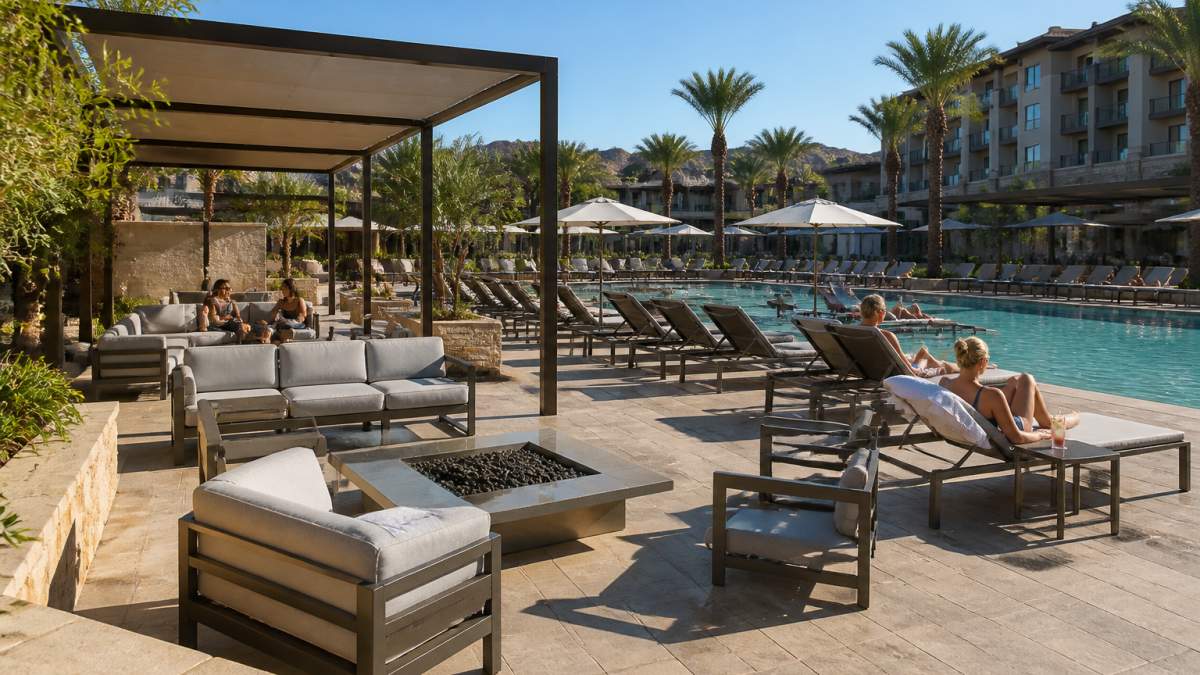
Chaise lounges dominate poolside environments. Commercial chaise lounges typically feature aluminum frames with synthetic wicker or powder-coated steel, plus weather-resistant cushions.
Shade solutions, umbrellas, pergolas, and shade structures, protect guests from intense sun while defining zones around the pool.
Dining tables and bar stools complete the poolside environment, letting guests eat and drink without leaving the area.
Selecting Hotel Outdoor Furniture Suppliers
Most supplier pages tell you what they sell, not how to compare them. For a hotel buyer shortlisting vendors, score each supplier against the same criteria so the decision is defensible to ownership and procurement. Below is a neutral framework you can apply to any vendor, including us.
Build a supplier scorecard
Score each candidate 1-5 on these dimensions and weight them to your project:
- Hospitality track record, Ask for three comparable properties (same climate, same property type, same guest tier). Request a reference contact, not just a logo wall.
- Material and finish transparency, Can they name the alloy, the powder-coat system, the foam density, and the fabric brand? Vague answers (“marine-grade aluminum”) usually mean unspecified inputs.
- Warranty structure, Separate frame, finish, cushion, and fabric warranties. A single blended number hides the weak link.
What to ask on the first call
A short script saves weeks:
- What alloy and temper is the frame? (6061-T6 and 6063-T5 are common commercial aluminum grades.)
- What powder-coat prep and cure is used? (A multi-stage pretreatment plus a cured finish holds up far better than a single-coat spray.)
- What foam density and type are in the cushions? (Open-cell, quick-dry foam is standard for poolside; closed-cell or standard foam traps water.)
- What is the fabric brand and its UV and mildew rating?
- What is the frame warranty, and does it cover finish failure separately?
- What is your lead time for a 40-piece order, and for a custom order?
- Can you supply replacement cushions and parts for at least the warranty period?
Ask every shortlisted supplier the same seven questions and put the answers in a spreadsheet. The comparison usually makes the decision obvious, and gives you documentation if a vendor underperforms.
Lead times, samples, and customization
Lead times vary by material and finish. Stocked aluminum frames in standard finishes ship fastest; custom colors, dimensions, and woven or rope pieces add weeks because they’re built to order.
Always request a physical sample: a frame finish chip, a cushion fabric swatch, and a foam sample.
Customization is where hospitality projects diverge from catalog buying. Odd-shaped patios, fixed architectural elements, and branded color schemes usually require modified dimensions or finishes.
Warranty and service terms to compare
Warranties are not interchangeable. Compare them line by line:
- Frame, Look for multi-year coverage; some commercial suppliers offer lifetime frame warranties.
- Finish, Powder-coat and paint warranties are usually shorter than frame warranties and often exclude chips from normal use.
- Cushions and foam, Typically the shortest coverage; ask what voids it (improper cleaning, standing water, bleach).
Also clarify what is excluded: acts of nature, commercial cleaning chemicals, and improper storage are common carve-outs. A warranty is only as good as the parts and labor behind it, so ask who pays shipping on a warranty replacement.
Delivery, installation, and replacement supply
Confirm freight terms up front: who pays freight, who unloads, and who is responsible for damage found at delivery?
Ask whether the supplier offers assembly and placement or your team handles it. On large orders, professional assembly reduces damage and ensures hardware is torqued correctly.
Finally, confirm long-term parts availability. Hotels replace individual pieces, not whole collections.
Score every supplier on the same seven criteria, get warranty and lead-time terms in writing, and confirm replacement parts availability before you sign. The cheapest quote is rarely the lowest total cost.
Durability Standards and Weather Resistance
“Commercial grade” is a marketing phrase until it’s tied to testable performance. This section covers the criteria hotel buyers should evaluate, and how to verify them, so you can compare furniture on evidence rather than adjectives.
The performance criteria that matter
For a hotel environment, evaluate furniture against six measurable criteria:
- UV resistance, How well the finish, fabric, and foam resist fading and embrittlement under sustained sun.
- Corrosion resistance, How well the frame and hardware resist rust and pitting from moisture, chlorine, and salt.
- Moisture and mildew resistance, Whether cushions and woven materials drain and dry, or trap water.
- Structural strength and stability, Load capacity, joint integrity, and resistance to tipping in wind.
- Finish durability, Resistance to chipping, scratching, and abrasion from daily use and cleaning.
- Cleanability, Whether the piece survives commercial cleaning chemicals without degrading.
How to verify UV and finish performance
UV damage shows up as fading, chalking, and brittleness. Commercial pieces address it with UV-stabilized resins, UV-resistant powder coatings, and solution-dyed fabrics.
Ask suppliers for the specific inputs:
- Frame finish, Which powder-coat system, and what pretreatment? A multi-stage pretreatment (clean, rinse, and conversion coating) before powder application is the standard for durable outdoor finishes.
- Fabric, Which brand and construction? Solution-dyed acrylics and similar high-performance fabrics hold color far better than piece-dyed or printed fabrics. Fabric makers publish their own UV and fading warranties, ask for the brand so you can verify the terms directly.
- Foam, Open-cell, quick-dry foam is the standard for poolside cushions because it lets water pass through and air dry. Standard upholstery foam holds water and promotes mildew.
“UV-resistant” without a named fabric brand or finish system is not verifiable. Ask for the spec sheet, not the marketing line.
Corrosion resistance: what to look for
Corrosion is the leading cause of premature failure in poolside and coastal furniture. Risk varies by environment:
- Chlorine and pool chemicals attack untreated steel and low-grade hardware.
- Salt spray accelerates corrosion in coastal and near-coastal properties.
- Standing water at joints and feet promotes rust from the inside out.
Mitigations to confirm:
- Aluminum frames, Naturally corrosion-resistant; powder coating adds a protective barrier. Common commercial grades include 6061-T6 and 6063-T5.
- Stainless steel, Higher corrosion resistance, especially in salt environments; heavier and typically more expensive. Confirm the grade, as not all stainless performs equally in coastal air.
- Hardware, Stainless or coated fasteners resist rust far better than plain steel. Ask specifically about screws, bolts, and glides.
Structural strength, stability, and wind
Heavy use and wind are the two forces that break outdoor furniture. Evaluate:
- Load capacity, Ask for the rated weight capacity per seat and per table.
- Joint construction, Welded frames generally outperform mechanically fastened frames under repeated stress; confirm weld quality and whether joints are reinforced.
- Stability, Heavier frames and weighted bases resist tipping in wind. On exposed rooftops and decks, weight and base design matter more than style.
Testing and standards to reference
Independent testing separates claims from performance. Ask suppliers whether their products have been tested to recognized standards, and request the reports.
- ASTM International publishes test methods and specifications relevant to furniture performance, including tests for structural integrity, surface finish, and weathering. Ask which specific standards a product has been tested to, and request the report.
- BIFMA (the Business and Institutional Furniture Manufacturers Association) publishes durability and safety standards widely used in commercial furniture procurement. BIFMA-level testing is a strong signal for contract-grade products.
- Fabric and foam, High-performance fabric makers publish their own UV, fading, and mildew test results. Request them by brand name.
When a supplier claims commercial-grade construction, ask for the test report or the standard it was tested to. A vendor who can produce documentation is a safer bet than one who cannot.
Accessibility, safety, and code considerations
Durability isn’t the only compliance issue on a hotel patio. Before specifying furniture, confirm:
- Accessible routes, Outdoor dining and seating areas at places of public accommodation are generally subject to accessibility requirements under the Americans with Disabilities Act (ADA). Confirm clear widths, turning space, and accessible seating at tables.
- Fire requirements, Commercial upholstered furniture may be subject to flammability requirements depending on the jurisdiction and occupancy (Upholstered Furniture). Ask suppliers for documentation on cushion and fabric flammability where required.
- Stability and anchoring, In high-wind areas, umbrellas and shade structures may need weighted or anchored bases. Check local wind and building requirements.
Accessibility, fire, and wind requirements vary by location and occupancy type. Confirm requirements with your local code official before ordering, do not rely on a supplier’s general statement of compliance.
A practical verification checklist
Before you commit to a collection, confirm:
- Named frame alloy and finish system
- Named fabric brand with UV and fading warranty
- Foam type (open-cell, quick-dry for poolside)
Furniture that passes this checklist is genuinely commercial grade. Furniture that cannot answer these questions is a warranty claim waiting to happen.
Total Cost of Ownership and Lifecycle Planning
The initial purchase price of commercial outdoor furniture tells only part of the story.
Cheap residential furniture costs less upfront but needs replacement every two to three years.
Maintenance costs vary by material.
Replacement and repair costs accumulate quickly with inferior furniture, a single rusted frame or faded cushion adds unexpected expense.
Lifecycle planning means choosing furniture designed to last as long as you need it.
Maintenance, Cleaning, and Seasonal Storage
Proper maintenance extends the life of commercial outdoor furniture.
Aluminum and synthetic materials need only mild soap, water, and soft brushes.
Inspect powder-coated finishes periodically for chips or scratches; touch-up paint prevents rust at damaged areas.
Clean synthetic wicker and rope gently with soft brushes and mild soap.
Cushions need regular attention.
Frequently Asked Questions
What makes outdoor furniture commercial grade?
Commercial grade outdoor furniture is engineered for heavy use, frequent cleaning, and extreme weather. It meets or exceeds ASTM standards for durability, uses corrosion-resistant materials like powder-coated steel, stainless steel, or aluminum, and is designed to withstand thousands of guest interactions annually. Commercial pieces typically have reinforced frames, UV-resistant fabrics, and components rated for hospitality environments where furniture is moved, cleaned, and exposed to chlorine, salt, and intense sunlight.
Which materials hold up best for hotel outdoor furniture?
Aluminum, stainless steel, synthetic wicker, and powder-coated steel are the top performers. Aluminum is lightweight and corrosion-resistant, stainless steel offers superior durability in salt-air environments, synthetic wicker resists mold and fading, and powder-coated steel provides strength with rust protection. Teak wood is also excellent for premium applications but requires more maintenance. The best choice depends on your climate, guest volume, and maintenance capacity.
How do hotels choose suppliers for commercial outdoor furniture?
Hotels evaluate suppliers on warranty coverage, lead times, customization options, material quality, and local service. Look for suppliers with proven commercial-grade construction, ASTM compliance documentation, and experience in hospitality settings. Check references from similar properties, confirm they offer bulk ordering discounts, and verify their installation and maintenance support. A supplier with 30+ years in the industry and factory-direct options can provide valuable expertise.
How long should commercial outdoor furniture last?
Quality commercial-grade furniture lasts 7-12 years in heavy-use hospitality environments, depending on materials and maintenance. Aluminum and stainless steel pieces often exceed 10 years, while synthetic wicker typically lasts 8-10 years. Powder-coated steel lasts 7-9 years if the coating is maintained. Proper seasonal storage, regular cleaning, and prompt repair of damage significantly extend lifespan. Lifetime warranties on frames and multi-year warranties on cushions indicate manufacturer confidence in durability.
