
Table of Contents
- Why Arizona Sun Destroys Ordinary Patio Furniture
- Weather-Resistant Patio Furniture Materials That Survive Extreme Heat
- Best Outdoor Furniture for Hot Climates: Key Features to Look For
- Fade-Resistant Outdoor Furniture: How to Spot It Before You Buy
- Outdoor Furniture Covers for Sun Protection: Do They Really Help?
- Custom vs. Stock: Which Weather Resistant Outdoor Furniture Is Right for You?
- Maintenance That Keeps Arizona Sun Furniture Looking New
- Conclusion: Choosing Furniture That Lasts in Arizona
- Frequently Asked Questions
Last Updated: October 14, 2026
Why Arizona Sun Destroys Ordinary Patio Furniture
Arizona’s desert climate is brutal on outdoor furniture. Summer surface temperatures on metal and stone routinely climb well past the point where standard finishes break down, and the combination of intense ultraviolet radiation, single-digit humidity, and wide day-to-night temperature swings attacks patio furniture in ways that coastal or temperate climates never do.
At Molino Patio, we have spent more than 30 years building and delivering outdoor furnishings across Arizona, and we have watched the same failures repeat: powder coats chalk and peel, resin wicker turns brittle, cushions fade to a washed-out gray, and steel frames that looked fine in year two start weeping rust by year three.
The best weather resistant outdoor furniture for Arizona sun is built around materials and finishes chosen for UV exposure and heat, not for how it looks in a showroom. This guide breaks down which materials hold up, what features actually matter, and how to tell fade-resistant outdoor furniture from furniture that just claims to be.
Weather-Resistant Patio Furniture Materials That Survive Extreme Heat
The material you choose decides almost everything about how long your furniture lasts in full sun. Here is how the main options compare.
| Material | Heat Behavior | UV Resistance | Maintenance Level | Best For |
|---|---|---|---|---|
| Wrought iron | Stays cooler than thin metal | Excellent with powder coat | Low | Full-sun patios, commercial use |
| Aluminum | Absorbs and holds heat | Good | Low | Lightweight setups, shade areas |
| Synthetic wicker | Can soften in peak heat | Varies by resin quality | Medium | Covered patios, resort seating |
| Teak | Weathers to silver-gray | Good, needs oiling | Medium to high | Shaded or semi-shaded spaces |
Wrought Iron: Heavy, Durable, and Built for Desert Heat
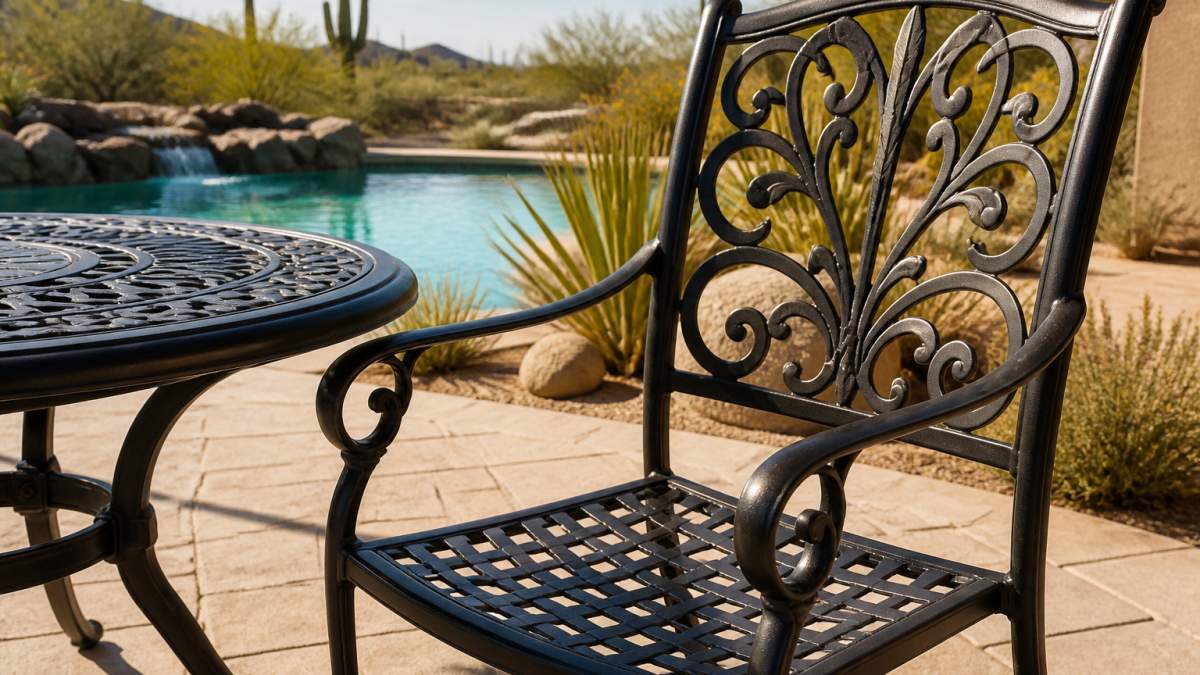
Wrought iron is the material we recommend most often for exposed Arizona patios. It is dense, so it does not flex or wobble in wind, and a properly applied powder coat seals the metal against the moisture that drives rust.
The weight matters in a practical sense. A heavy frame stays put during monsoon gusts, which is why wrought iron sets are common at hotels, condo complexes, and public facilities. The trade-off is that you are not rearranging it on a whim, and cheaper iron with a thin finish will still rust at weld points.
Aluminum: Lightweight but Heat-Absorbent
Aluminum is easy to move and will not rust, which makes it a reasonable pick for covered patios and balconies. In direct sun, though, bare aluminum heats up fast and can become uncomfortable to touch. Look for a powder-coated finish and keep aluminum in shaded or partially shaded zones.
Synthetic Wicker and Teak: What Works and What Doesn’t
High-quality synthetic wicker holds color well when the resin is UV-stabilized; low-grade wicker cracks and fades within a couple of seasons. Teak is naturally rot-resistant and ages to a silver-gray, but it needs periodic oiling in dry heat to prevent surface checking. Neither is our first choice for a fully exposed patio.
Best Outdoor Furniture for Hot Climates: Key Features to Look For
The best outdoor furniture for hot climates shares a short list of features. Check these before you buy anything:
- Powder-coated or sealed frames that resist chalking and peeling
- UV-stabilized finishes rated for continuous sun exposure
- Solution-dyed fabrics where the color runs through the fiber, not just on the surface
- Drainage-friendly cushion cores that dry quickly after rain
- Weight and stability suited to wind exposure
- Replaceable parts so a worn cushion or sling does not mean a new set
A common mistake is buying on looks alone. Furniture that photographs well in a showroom may have none of these features, and that gap is exactly why so many patio sets fail early.
Fade-Resistant Outdoor Furniture: How to Spot It Before You Buy
Fade-resistant outdoor furniture uses solution-dyed acrylic or similar fabrics and UV-stabilized resins, so color holds up under constant sun instead of bleaching out.
The quickest test is the fabric itself. Ask whether the color is dyed into the fiber or printed on top. Surface-dyed fabric fades first. Solution-dyed fabric keeps its color far longer, which matters when your furniture sits in the sun every day of the year.
For frames, look for a thick, even powder coat with no thin spots at joints and welds. Thin coatings fail first at exactly those points.
Run your hand along the underside of a frame and around the welds. If the finish feels thin or you can see bare metal, that is where rust will start. A quality powder coat covers evenly, including the spots you cannot see from the front.
Outdoor Furniture Covers for Sun Protection: Do They Really Help?
Covers help, but they are not a cure-all. A good cover blocks direct UV and keeps dust and debris off your furniture, which slows fading and reduces cleaning. In Arizona, the catch is heat: a dark cover over metal can trap warmth and, in some cases, hold moisture after a rare rain.
Use covers that are breathable and light-colored, and make sure the furniture is dry before you cover it. For furniture in constant use, covers are less practical than simply choosing sun-ready materials in the first place.
Custom vs. Stock: Which Weather Resistant Outdoor Furniture Is Right for You?
Custom furniture wins when your space is unusual. L-shaped patios, low overhangs, odd dimensions, and commercial layouts rarely fit standard sets well, and forcing stock pieces into those spaces leaves wasted room and awkward gaps.
Stock furniture wins on speed and simplicity when your space is standard and you need something quickly.
At Molino Patio, we build both factory-direct and custom-made pieces, which means we can match a set to an L-shaped patio or a bulk order for a condo complex rather than asking you to work around what happens to be in stock. For property managers furnishing multiple units, custom sizing also keeps a complex looking consistent.
Ordering stock furniture for a non-standard space usually means living with a poor fit for years. Measure your patio, including overhangs and traffic paths, before you commit to anything off the shelf.
Maintenance That Keeps Arizona Sun Furniture Looking New
A little routine care goes a long way. Wipe frames with a damp cloth monthly to remove abrasive desert dust, which scratches finishes over time. Rinse cushions and let them dry fully in the shade, not direct sun. Re-oil teak annually, and touch up any scratch on a powder-coated frame before rust can take hold.
The real difference between furniture that lasts a decade and furniture that lasts three years usually comes down to these small habits, not the original purchase.
Conclusion: Choosing Furniture That Lasts in Arizona
The sun here does not forgive shortcuts. Furniture built for milder climates fails fast in full desert exposure, and replacing it every few years costs more than buying right once.
Molino Patio builds wrought iron sets, fire tables, pergolas, and custom pieces designed for exactly this climate, backed by a lifetime warranty on frames, a 5-year warranty on cushions, and an interest-free 90-day financing option. We also handle delivery and installation, so your furniture arrives ready to use.
Get started with Molino Patio and furnish your patio with pieces built to survive the sun.
Frequently Asked Questions
What outdoor furniture material holds up best in intense sun?
Wrought iron and powder-coated aluminum are the most durable choices for intense sun. Wrought iron resists rust when properly finished and won’t fade or crack. Powder-coated aluminum won’t rust and stays cooler than bare metal. Synthetic wicker made from high-density polyethylene also holds up well if it has UV inhibitors. Teak is naturally weather-resistant but requires periodic oiling to prevent drying and cracking. For Arizona’s extreme conditions, wrought iron and powder-coated aluminum offer the best combination of strength and sun resistance.
How do you protect outdoor furniture from UV damage?
Use outdoor furniture covers for sun protection when pieces aren’t in use. Look for covers made from solution-dyed acrylic or marine-grade polyester with UV inhibitors. Position furniture under pergolas or shade sails during peak sun hours. Clean cushions regularly to remove dust that can trap heat. For long-term protection, choose furniture with powder-coated finishes and fade-resistant fabrics.
Is wrought iron good for hot, sunny patios?
Yes, wrought iron is excellent for hot, sunny patios. It’s heavy enough to stay put in wind, won’t fade or crack, and holds up to intense UV. The key is the finish: powder-coated wrought iron resists rust better than painted versions. However, bare metal can get hot to the touch in direct sun, so consider cushions or place it in partial shade. With proper care, wrought iron furniture can last decades in Arizona conditions, which is why it remains a top choice for weather-resistant patio furniture materials.
How often should outdoor furniture be cleaned and maintained in a hot, dry climate?
Clean outdoor furniture every two to four weeks during peak sun season. Dust and pollen accumulate quickly and can scratch finishes. Wipe metal frames with a damp cloth and mild soap. Rinse cushions and let them dry completely before replacing. Apply touch-up paint to any chips immediately to prevent rust. In winter, a deeper clean and inspection for damage is recommended.
