
Table of Contents
- Why Arizona Sun Fades Outdoor Furniture So Fast
- How to Tell Fading Apart From Other Sun Damage
- Best Patio Furniture Materials for Sun Exposure
- How to Protect Patio Furniture From Sun Damage
- Choosing Fade-Resistant Outdoor Cushions
- How Long Does Outdoor Furniture Last in Arizona?
- Conclusion: Slowing the Fade Starts With the Right Choice
- Frequently Asked Questions
Last Updated: October 12, 2026
Why Arizona Sun Fades Outdoor Furniture So Fast
The Arizona furniture fade problem starts with sunlight: the state gets more intense sun than almost anywhere else.
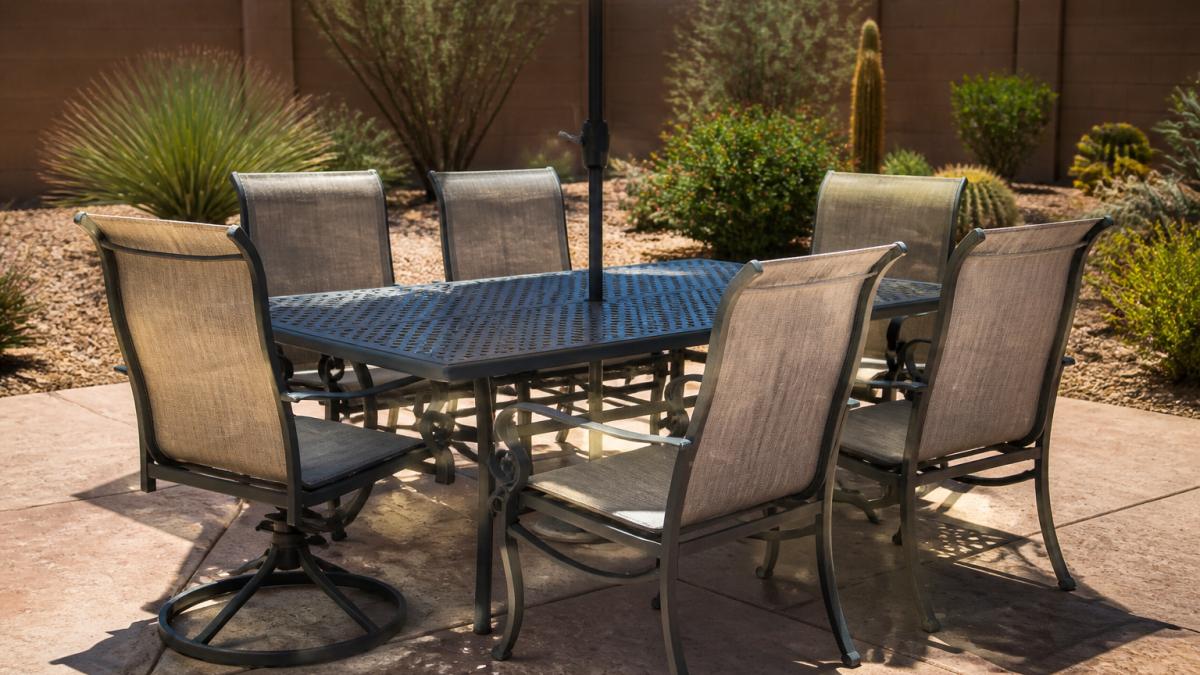
At Molino Patio, we have watched this play out for over 30 years.
Sun exposure attacks both color and the materials holding that color together. In most climates, furniture gets a break.
The UV index in many parts of Arizona regularly climbs into the extreme range during summer, meaning UV radiation hits your patio set at full strength for hours at a time. The EPA sun safety guidance explains how UV intensity works and why it varies so much by region and season.
Fabric, wood, metal, and resin all react differently, but none are immune.
What UV Rays Actually Do to Fabric and Finish
UV radiation is the main driver of color loss, breaking apart pigments in fabric and protective coatings on metal and wood.
Think of a fabric dye as a chain of molecules. UV light snaps those chains; when enough break, the color fades.
Protective finishes work the same way.
That is why a piece can look fine for a year, then fade fast. The finish was doing its job.
Heat, Dryness, and the Damage They Cause
Heat and low humidity make UV damage worse. Arizona combines both, which is why fading happens faster here than in humid climates.
High temperatures dry out and crack wood and make fabric brittle over time.
Temperature swings matter too. Daytime heat expands materials. Cool nights contract them.
So the damage is not just the sun, it is the sun plus heat plus dryness, working together.
How to Tell Fading Apart From Other Sun Damage
Fading is a color change. Other sun damage changes the structure of the material. Knowing the difference tells you whether you can restore a piece or need to replace it.
Here is how to sort it out:
- Fading: Color looks washed out or lighter, but the surface feels smooth and intact.
- Chalking: A powdery film on metal or plastic. The surface is breaking down, not just losing color.
- Cracking: Small splits in wood or resin. This is heat and moisture damage, not fading.
Run your hand across the surface. If it comes away chalky, you have more than fading.
This matters because the fix is different. Fading might be slowed with a protective treatment. Chalking or cracking usually means the material itself is failing.
Best Patio Furniture Materials for Sun Exposure
Some materials hold up far better than others in full sun. The best patio furniture materials for sun exposure are powder-coated aluminum, wrought iron, high-density polyethylene (HDPE) resin, and solution-dyed acrylic fabric. But in Arizona, where the UV index regularly reaches extreme levels (11+) for months, the gap widens: a frame that lasts 15 years in a mild climate may show chalking or color loss in 3-5 years here if the finish isn’t rated for intense UV.
Here is how the common materials compare, with the fade-resistance mechanism that matters:
| Material | Fade Resistance | Fade-Resistance Mechanism | Best For | Watch Out For |
|---|---|---|---|---|
| Powder-coated aluminum | High | Baked-on polyester or fluoropolymer coating absorbs UV before it reaches the metal; fluoropolymer (PVDF) resins resist chalking better than standard polyester | Lightweight sets, full sun | Chips if struck hard; cheap powder coats chalk in 2-3 years |
| Wrought iron | High | Heavy metal mass resists heat distortion; finish relies on paint or powder coat for UV blocking | Heavy, permanent setups | Needs repainting every 3-5 years in full sun |
| HDPE resin | High | Color is molded through the material, not applied as a surface coating; UV inhibitors are compounded into the plastic | Poolside, no-maintenance needs | Can feel less premium; lighter colors may show dust more |
| Teak or hardwood | Medium | Natural oils and dense grain slow UV penetration; requires re-oiling to maintain | Classic looks | Cracks in dry heat; oil breaks down faster under extreme UV |
| PVC or cheap plastic | Low | Color is usually surface-applied or thin; no built-in UV stabilization | Budget, short-term use | Chalking, brittleness, and color loss within 1-2 summers |
| Solution-dyed acrylic | High | Pigment is added to the fiber before it is extruded, so color runs through the entire thread; UV inhibitors are built into the fiber | Cushions and umbrellas | Higher upfront cost; still benefits from shade |
Which Materials Hold Color Longest in Full Sun
Solution-dyed acrylic fabric holds color longest because the pigment runs through the whole fiber, so fading has to work through the entire thread.
Powder-coated aluminum and wrought iron frames also hold color well, but the coating type matters.
HDPE resin is another strong performer because the color is molded into the material. There is no coating to fail.
The weak link is usually the cushion, not the frame. A great frame with a cheap cushion will still look tired in two years. When shopping, look for these specifications:
- Fabric type: Solution-dyed acrylic (often sold under brand names like Sunbrella, Outdura, or Recasens) is the standard for fade resistance.
- UV resistance rating: Some fabrics carry a UV resistance rating (e.g., 1,000+ hours of QUV testing). Higher hours mean slower color loss.
- Colorfastness rating: Look for a colorfastness to light rating of 4-5 on the AATCC Gray Scale (1-5 scale). A rating of 4 or higher indicates minimal fading under prolonged UV exposure.
Buyers often focus on the frame and overlook the cushion, but in Arizona the cushion takes the hardest UV hit because it has the most surface area exposed and the least mass to dissipate heat.
How to Protect Patio Furniture From Sun Damage
You can slow fading with a routine built around Arizona’s conditions: extreme UV for 5-6 hours midday, monsoon dust and rain from June through September, and dry heat that pulls moisture from wood and fabric. The goal is to cut UV exposure during peak hours and keep materials from drying out or getting abraded by dust.
Follow these steps, timed to the seasons:
- Move furniture into shade during peak UV hours (10 a.m. to 4 p.m.). In many parts of Arizona, the UV index hits 11+ (extreme) during these hours from May through September. Even a few hours of afternoon shade can cut the daily UV dose by half or more. A shade sail or pergola that blocks direct sun during this window is the single most effective protection.
- Use furniture covers when pieces sit unused, but choose breathable covers. In Arizona, a non-breathable cover can trap heat and moisture, especially after monsoon rains, leading to mildew on cushions and rust on metal. Look for covers with UV-resistant coating and vented panels. During monsoon season (June-September), remove covers after rain to let surfaces dry.
- Add a pergola or shade sail with a UV-blocking fabric. Not all shade fabrics block UV equally. Look for fabric rated to block 90%+ of UV rays. A shade sail with a tight weave and UV inhibitors will last longer and protect better than a cheap tarp.
- Treat wood once or twice a year, before summer and after monsoon. A UV-blocking oil or sealant keeps wood fibers from drying out and slows surface cracking. In Arizona’s dry heat, untreated wood can lose moisture quickly, so reapply before the hottest months and again after the monsoon to replace what rain and sun have broken down.
- Wipe down metal and resin monthly, and after dust storms. Dust and grit hold heat and scratch finishes when furniture is moved or sat on. A microfiber cloth and mild soapy water remove abrasive particles before they work into the coating. During monsoon season, dust storms (haboobs) can coat furniture in a layer of fine silt that acts like sandpaper if not rinsed off.
- Store cushions indoors when not in use, especially during monsoon. Cushions take the hardest UV hit and are also vulnerable to moisture. Even solution-dyed acrylic can develop mildew if left out in humid monsoon conditions. A storage bin or indoor closet keeps them dry and out of the sun.
- Rotate pieces monthly so no single side faces the sun all season. UV exposure is cumulative. Rotating a chair or table 180 degrees spreads the UV dose across more surface area, slowing localized fading.
The single biggest win is shade during the hottest part of the day. A pergola or shade sail cut direct UV exposure more than any spray-on product. If you can only do one thing, do this.
A practical protection routine means thinking about placement first: if a spot gets full afternoon sun, no material will last as long there. Follow the seasonal pattern too, pre-summer to re-oil wood and inspect finishes, monsoon season to dry covers and cushions, and post-monsoon to clean and reapply protectants before the dry fall sun.
Do not apply spray-on UV protectants to fabric unless the manufacturer recommends it. Many after-market sprays can void fabric warranties or leave a sticky residue that attracts dust. Solution-dyed acrylic already has UV inhibitors built into the fiber; adding a spray is usually unnecessary and can do more harm than good.
Finally, keep a simple inspection schedule. Once a month, run your hand across surfaces to check for chalking, cracking, or brittleness. Catching these early lets you refinish or re-cover before the damage becomes structural. In Arizona, the difference between a set that lasts 5 years and one that lasts 15 often comes down to consistency.
Choosing Fade-Resistant Outdoor Cushions
Fade-resistant outdoor cushions use solution-dyed fabric, that is the feature to look for.
Check these details before you buy:
- Fabric type: Solution-dyed acrylic is the standard for fade resistance.
- Cushion ties: Ties keep cushions from blowing off and reduce wear from handling.
- Fabric finishes: Look for built-in UV inhibitors, not after-market sprays.
Cushion ties are a small feature people overlook. But a cushion that stays put gets handled less, and less handling means less wear on the fabric.
At Molino Patio, our cushions carry a 5-year warranty, and our frames carry a lifetime warranty. That coverage exists because we build for this climate, not a mild one.
How Long Does Outdoor Furniture Last in Arizona?
How long outdoor furniture lasts in Arizona depends on the material, the shade, and how well you maintain it. A well-built set in partial shade can last many years. A cheap set in full sun may look worn in two or three.
Here is a rough guide to what to expect:
- Powder-coated aluminum or wrought iron frames: 10-20+ years with basic care
- HDPE resin: 10-15 years, very low maintenance
- Solution-dyed acrylic cushions: 5-10 years before noticeable fading
Shade and maintenance slow the Arizona furniture fade more than material alone, a covered patio can double the life of the same set.
Do not judge a set by how it looks in year one. The finish is still fresh, so everything looks good. The real test is year three, once UV has had time to work through the coating.
If a frame is structurally sound but the finish has faded, refinishing can add years. If cracks run deep or the metal has rusted through, replacement is the better call.
Conclusion: Slowing the Fade Starts With the Right Choice
Arizona sun is hard on outdoor furniture, and no material is fully immune.
Molino Patio builds furniture for this exact climate. We offer wrought iron sets, custom-built pieces, and fade-resistant cushions, all backed by a lifetime frame warranty and a 5-year cushion warranty.
Get started with Molino Patio and choose patio furniture built to hold its color through year after year of Arizona sun.
Frequently Asked Questions
Why does outdoor furniture fade so quickly in Arizona?
Arizona receives some of the highest UV radiation levels in the country, and that intensity breaks down the chemical bonds in dyes and protective finishes. Combined with months of triple-digit heat and very low humidity, fabrics dry out and colors lose their vibrancy faster than in milder climates. Furniture that might last five or more years elsewhere can show noticeable fading within one or two seasons here without proper protection.
Which outdoor furniture materials resist fading best in full sun?
Solution-dyed acrylic fabrics, powder-coated aluminum, and high-density polyethylene resin hold their color longest under intense sun. Teak and other tight-grain hardwoods weather to a silver-gray patina rather than fading unevenly. Wrought iron with a quality powder coat resists fading well but needs touch-ups if the coating chips. Avoid untreated softwoods and low-grade polyester fabrics, which break down quickly in Arizona conditions.
Can faded outdoor furniture be restored, or does it need to be replaced?
It depends on the material and how deep the damage goes. Fabric cushions with mild fading can sometimes be refreshed with fabric dye, but severe UV degradation weakens the fibers and replacement is the better option. Powder-coated metal can be recoated, and wood can be sanded and refinished. If the structure itself is cracked, warped, or rusted through, replacement is usually more cost-effective than repair.
How can I protect patio furniture from sun damage without moving it inside?
Use furniture covers during the hottest part of the day or when the furniture is not in use, and add a pergola, shade sail, or umbrella to block direct UV rays. Rotating cushions and flipping them regularly also helps prevent one side from taking all the exposure. Consistent cleaning removes dust and debris that can accelerate surface breakdown.
